Skip to content
Built Environment

A topic from several perspectives

Apply this topic to your work →

Brick

Explore brick through the perspectives below. Compare their examples and tradeoffs, then connect what you learn to your own work.

Illustrated study

Reading a material through drawing

A measured study can separate surface, proportion and detail.

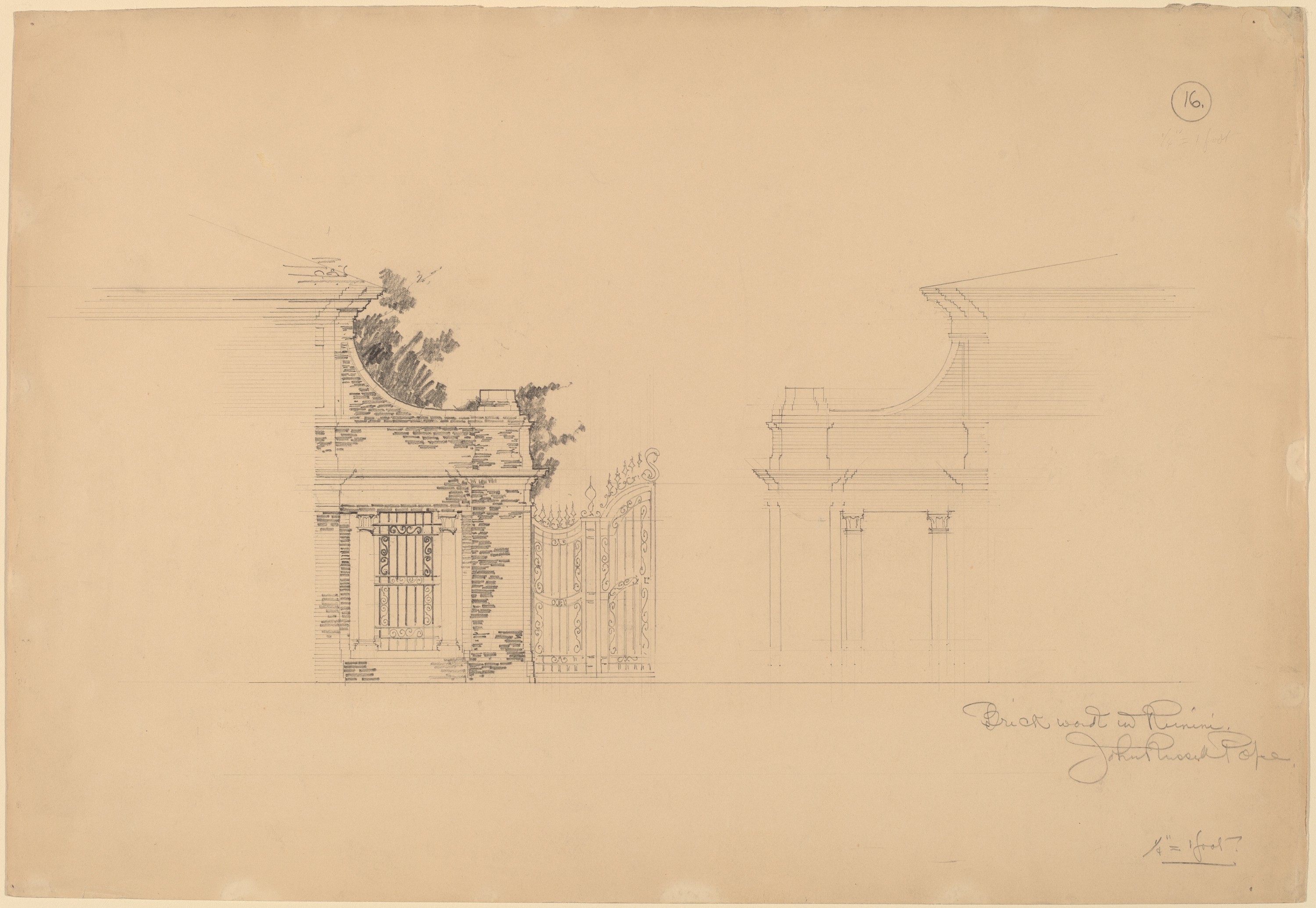
Graphite architectural drawing showing textured brickwork and ironwork on the left, with an outline study of the same architectural forms on the right.

Figure 1 · c. 1898

Brickwork in Rimini

Compare the textured drawing at left with the outline at right. One records the visible surface; the other makes the profiles and proportions easier to isolate.

John Russell Pope · National Gallery of Art
Gift of Mrs. John Russell Pope · 1939.2.17

View full size ↗Download image
Collection record and reuse rights

Display copies are resized and compressed. Source and license links apply to the image above.

Explore more museum and archive collections →

Learn from an example

When a harder repair material causes damage

The National Park Service explains how softer mortar in historic masonry provides a replaceable path for moisture and salts. Hard modern mortar can be incompatible with softer historic brick.

What it helps you understand

Material strength by itself is an incomplete measure of suitability. A repair has to work with the existing wall, including how its materials handle moisture.

Bring it to your work

Before specifying a repair, identify what is known about the existing brick and mortar and what needs a qualified assessment. This example explains the decision; it is not a mortar specification.

Built Environment · Brick

Look at the joint as well as the unit

Study a brick surface through its repetition and exceptions. Describe visible patterns without inferring structural performance from appearance.

Try this

Use a photograph to mark bonds, joints, corners and changes in color or finish. Do not disturb the wall.

Reflect

Which details would require construction records to explain?

Take it further · optional follow-up

Compare a second photograph using the same detail categories. Separate differences you can see from construction explanations that still need records.

Compare with another activity · Manufacturing

The Mold: Look for the making question →

This opens a separate activity. Use Back to return to your sequence.

Prepared study prompt · not an editor-reviewed research article

Explore the perspectives

The eight prepared perspectives below are open to everyone. Sign in for expanded readings, a private notebook and collections.

Sign in for a deeper reading and notebook →

Material

What is it made of, and why does that matter?

Brick is a manufactured unit whose clay composition, firing and dimensions influence color, porosity and strength. Mortar joints, bonds and detailing are as important to a wall's behavior as the bricks themselves.

Historical

How did this evolve, and why has it endured?

Brickmaking has long histories in many regions, shaped by available clay, fuel and labor. Historic bond patterns and manufacturing marks can suggest construction practices, but reliable dating requires more evidence. A change in brick size or joint pattern can suggest an alteration, but it does not provide a date by itself. Compare the visible junction with photographs, plans and records of work. Keep a record of the clue separate from the story proposed to explain it.

Human

How do people actually experience this?

Brick is encountered at many scales: a hand-sized unit, a wall, a pavement and an entire street. Its texture, thermal behavior and repairability affect how people use and maintain buildings.

Ecological

How does it meet the living world?

Fired brick requires energy to manufacture, yet durable masonry may remain in service for generations. Reuse, transport, insulation and the whole wall assembly complicate simple environmental comparisons.

Cultural

How have different societies approached this?

Brick patterns can become distinctive markers of place and craftsmanship. A wall may embody local material traditions, industrial production or deliberate architectural expression.

Technical

How does it actually work?

The visible bond describes how units are arranged, but appearance alone cannot establish whether a wall is load-bearing or adequately reinforced. Study drawings, joints, moisture paths and the role of mortar.

Aesthetic

What makes it beautiful, meaningful, or enduring?

Brick offers rhythm through repetition and variation. Compare courses, joints, corners and shifts in color to understand how a surface can be ordered without becoming monotonous. At a corner, repeated courses must turn and meet another face. Look for changes in joint alignment, cut units and the way an opening interrupts the pattern. These details show how a general rhythm is resolved through particular decisions.

Lessons & Failures

What has humanity learned the hard way?

Water intrusion, incompatible repointing mortar, freeze-thaw cycles and movement can damage masonry. A repair should begin with diagnosing the cause rather than simply replacing visibly affected units.