
Skip to content
Built Environment

A topic from several perspectives

Apply this topic to your work →

The Window

Explore the window through the perspectives below. Compare their examples and tradeoffs, then connect what you learn to your own work.

Illustrated study

A window planned on paper

A design drawing shows how an image meets the divisions of a window.

Colored window design showing a winged figure holding a torch, with dark horizontal and vertical divisions crossing the composition.

Figure 1 · Late 19th–early 20th century

Design for window

Look at where the dark divisions cross the figure, wings and steps. The drawing asks us to read both an image and a divided surface. It is a proposal on paper, rather than a photograph of installed glass.

Louis C. Tiffany · The Metropolitan Museum of Art
Purchase, Walter Hoving and Julia T. Weld Gifts and Dodge Fund, 1967 · 67.654.75

View full size ↗Download image
Collection record and reuse rights

Display copies are resized and compressed. Source and license links apply to the image above.

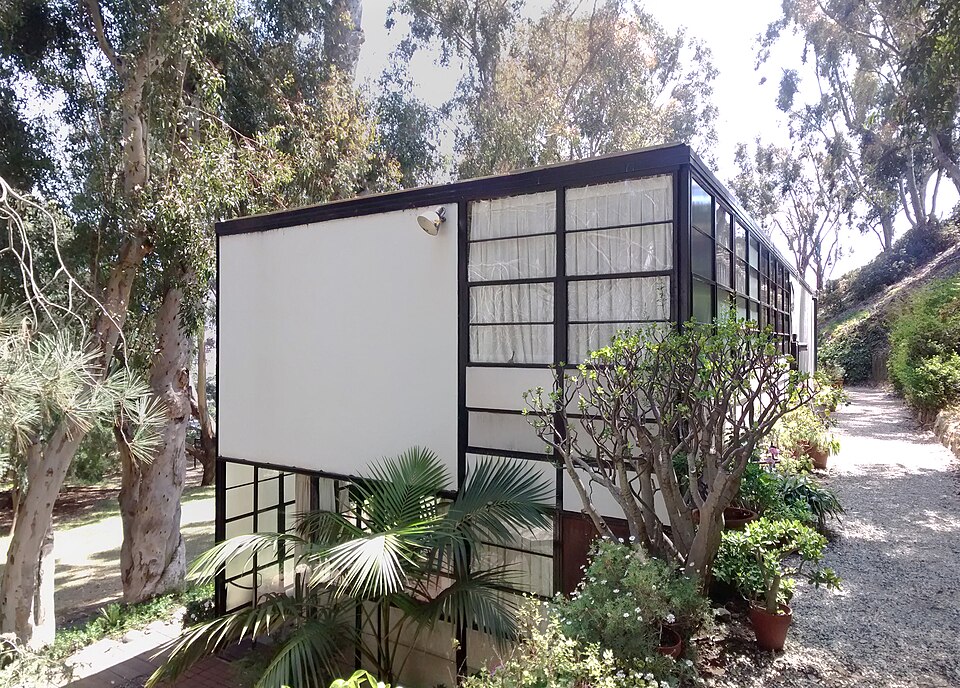
Eames House in Pacific Palisades, showing its black structural grid, translucent and glazed panels, pale solid infill, and surrounding trees.

Figure 2 · House completed 1949; photograph 2014

Eames House (Case Study House No. 8), glazed exterior

Compare the Tiffany drawing with the Eames House, completed in 1949. Here a repeated frame organizes clear and opaque panels across a residential facade. Look for where the grid stays regular and where the enclosure changes. This exterior photograph records the building in 2014; it cannot by itself establish the original construction details or the experience of its interior.

Gunnar Klack (photographer); house designed by Charles and Ray Eames · Wikimedia Commons
Photograph by Gunnar Klack, 2014 · CC BY-SA 4.0 · unmodified

View full size ↗Download image
Collection record and reuse rights

Display copies are resized and compressed. Source and license links apply to the image above.

Explore more museum and archive collections →

Built Environment · The Window

Compare views and conditions

A window offers several questions at once: what is seen, what is screened and how the room is experienced. Study a particular example before generalizing.

Try this

From indoors, record view, reflections and visible light at two times. Avoid opening or testing unfamiliar fittings.

Reflect

Which impression depends most on time, weather or position?

Take it further · optional follow-up

Make two captions for the same view: one recording visible conditions and one recording your response. Mark where preference enters the second account.

Compare with another activity · Graphic Design

White Space: Give space a specific job →

Prepared study prompt · not an editor-reviewed research article

Explore the perspectives

The eight prepared perspectives below are open to everyone. Sign in for expanded readings, a private notebook and collections.

Sign in for a deeper reading and notebook →

Material

What is it made of, and why does that matter?

A window combines glazing, frame, seals, fittings and surrounding wall. Each component has a different task: admitting light, supporting loads, resisting weather and permitting or preventing movement. Compare Tiffany's decorative design drawing with the modular glazed and opaque panels of the Eames House.

Historical

How did this evolve, and why has it endured?

Windows have changed with glassmaking, structural systems, heating and social expectations. Twentieth-century modernism expanded the use of large glazed areas, but earlier architecture also developed sophisticated ways of controlling light and views. Historical claims should be attached to particular buildings and periods.

Human

How do people actually experience this?

A window frames a view, affects privacy and provides information about time, weather and activity outdoors. Its height and position matter to people sitting, standing or moving through a room. A beautiful exterior composition may produce glare or limited views from certain interior positions.

Imagine the same window seen from a dining chair, a standing position and the far side of the room. Sketch what is visible from each position and where a person outside could see in. The exterior photograph cannot answer all of those questions; note which views need further evidence.

Ecological

How does it meet the living world?

Glazing mediates heat, daylight and the boundary between inside and outside. Orientation, shading, glass properties and climate all affect performance. Large windows are not inherently energy-efficient or inefficient; the complete assembly and building context determine the outcome.

Cultural

How have different societies approached this?

Windows can express openness, status, privacy, display or protection. Their placement reflects conventions about domestic life and public space. Compare a ceremonial window design with a residential facade to see how different purposes shape the relationship between seeing and being seen.

Technical

How does it actually work?

The Eames House facade organizes transparent, translucent and opaque infill within repeated structural bays. A curtain wall, by contrast, is an exterior enclosure that transfers its own loads to the building's structure without supporting the floors. Similar visual grids can conceal different technical systems.

Aesthetic

What makes it beautiful, meaningful, or enduring?

A window can be read as an opening, a surface and a composition of divisions. In Tiffany's drawing, the divisions interrupt a figurative image; in the Eames House they organize a larger facade. Compare the scale, rhythm and visual emphasis of the two works.

On a copy of each illustrated image, trace the main divisions before drawing any detail. Compare where those divisions reinforce an image or separate different panels. Then return to the unmarked originals and ask which lines attract attention at a distance.

Lessons & Failures

What has humanity learned the hard way?

Leaks, thermal bridging, failed seals, glare and difficult cleaning can arise when window design neglects environmental and maintenance demands. The visible frame alone cannot establish performance. Construction drawings, testing and condition surveys supply essential evidence.