Skip to content
Built Environment

A topic from several perspectives

Apply this topic to your work →

The Threshold

Explore the threshold through the perspectives below. Compare their examples and tradeoffs, then connect what you learn to your own work.

Illustrated study

Where one place becomes another

A detailed doorway study brings the edge between outside and inside into focus.

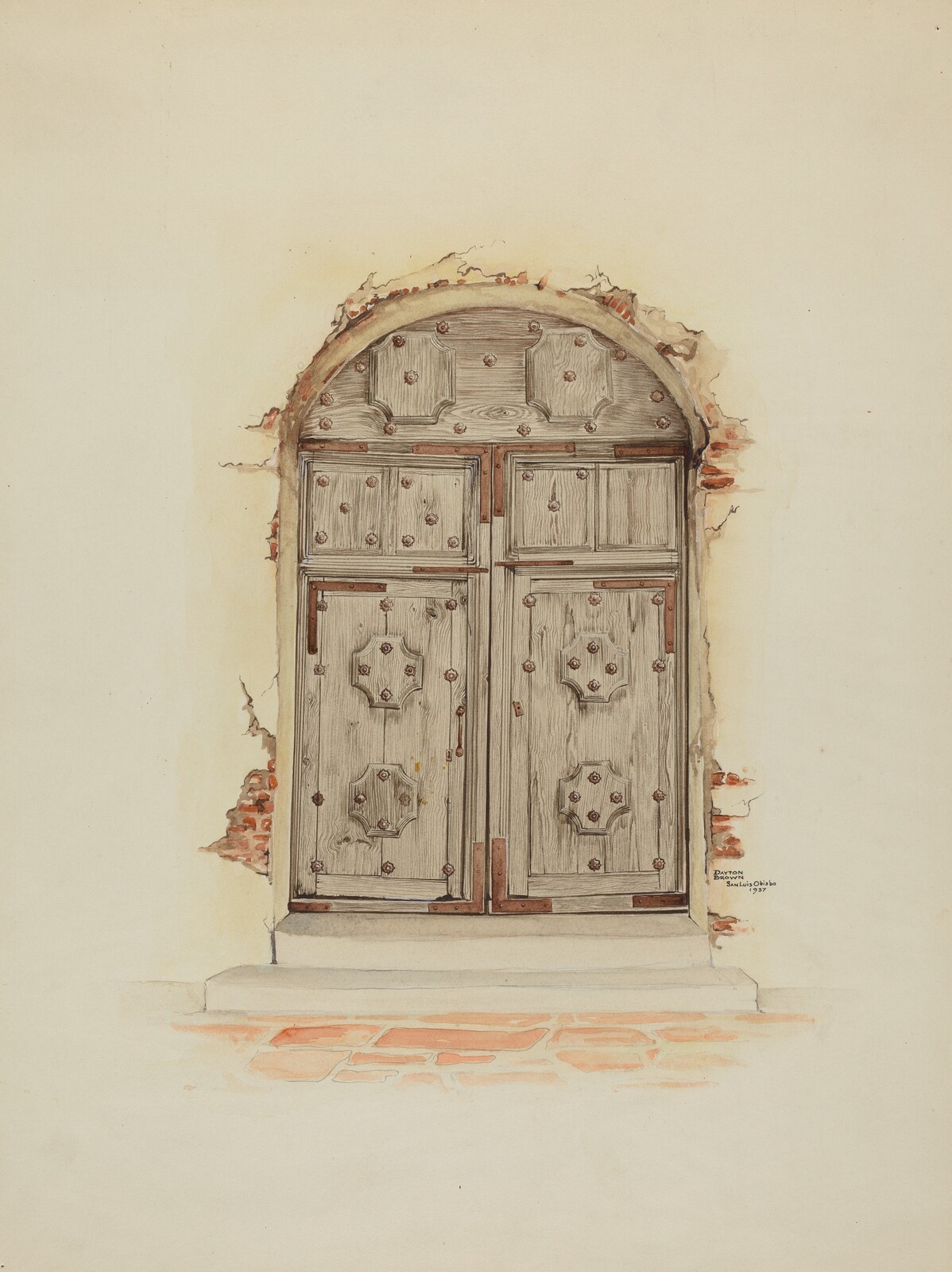
Watercolor and pencil drawing of an arched wooden double door with decorative metalwork, shallow steps and exposed brick at the edges of its plaster surround.

Figure 1 · 1937

Doorway

Start at the paving and move upward over the steps, door panels and arch. Materials and changes in level mark the act of entering before the door opens. What would an approaching visitor understand from this entrance, and what remains hidden? Notice a doorway near you in the same order.

Dayton Brown · National Gallery of Art, Washington
Index of American Design · 1943.8.5960

View full size ↗Download image
Collection record and reuse rights

Display copies are resized and compressed. Source and license links apply to the image above.

Explore more museum and archive collections →

Built Environment · The Threshold

Notice the moment of entry

An entrance can be studied as a sequence: approach, recognition, opening, crossing and orientation. Keep each stage distinct.

Try this

Describe a familiar entrance and note which cues tell you where to go. This is an observation, not an accessibility certification.

Reflect

Where does the entrance assume knowledge a newcomer may not have?

Take it further · optional follow-up

Write the entry sequence as five short instructions for a first-time visitor. Remove any instruction that the visible setting already communicates clearly.

Compare with another activity · Hospitality

The Guest Room: Read the first five minutes →
Connect this activity with other subjects

Follow a question through three activities, with a worked example and a worksheet for your observations.

  • Make arrival easier →

    Consider how spaces and words help someone find their way into an unfamiliar setting.

    This topic is activity 1 of 3.

Prepared study prompt · not an editor-reviewed research article

Explore the perspectives

The eight prepared perspectives below are open to everyone. Sign in for expanded readings, a private notebook and collections.

Sign in for a deeper reading and notebook →

Material

What is it made of, and why does that matter?

A threshold combines door, frame, floor transition, weather seal and often a change in level. The junction must accommodate movement, water and repeated use.

Historical

How did this evolve, and why has it endured?

Entrances have long signaled transitions between public and private life. Their form reflects changing building techniques, security needs and social conventions.

Human

How do people actually experience this?

An entrance communicates where to go and whether entry is permitted. Handles, lighting, signs and level changes affect confidence and accessibility. A first-time visitor needs to recognize the entrance, understand how the door operates and find the next destination. A familiar user may pass through without noticing those decisions. Compare both experiences, including arrival with luggage or when the building is poorly lit.

Ecological

How does it meet the living world?

A doorway is part of the thermal and moisture boundary of a building. Shading, seals and drainage can influence comfort and durability.

Cultural

How have different societies approached this?

The design of an entrance can express welcome, ceremony, authority or exclusion. Interpretation depends on the building's function and its community.

Technical

How does it actually work?

Study the approach, door swing, clearances, level changes and drainage together. A photograph cannot establish accessibility or code compliance.

Aesthetic

What makes it beautiful, meaningful, or enduring?

A threshold creates a sequence from approach to crossing. Proportions, light and material changes make that sequence perceptible before a person opens the door. A change from a low, shaded approach to a brighter interior can make arrival perceptible without a large sign. That effect is a sequence experienced in movement. Compare views before, during and after crossing rather than judging the doorway from one photograph.

Lessons & Failures

What has humanity learned the hard way?

Unclear wayfinding, slippery surfaces, water entry and inaccessible steps can turn an attractive entrance into a barrier. Evaluate the entire arrival sequence.