Skip to content
Medicine

A topic from several perspectives

Apply this topic to your work →

The Gown

Explore the gown through the perspectives below. Compare their examples and tradeoffs, then connect what you learn to your own work.

Illustrated study

Clothing and the role it announces

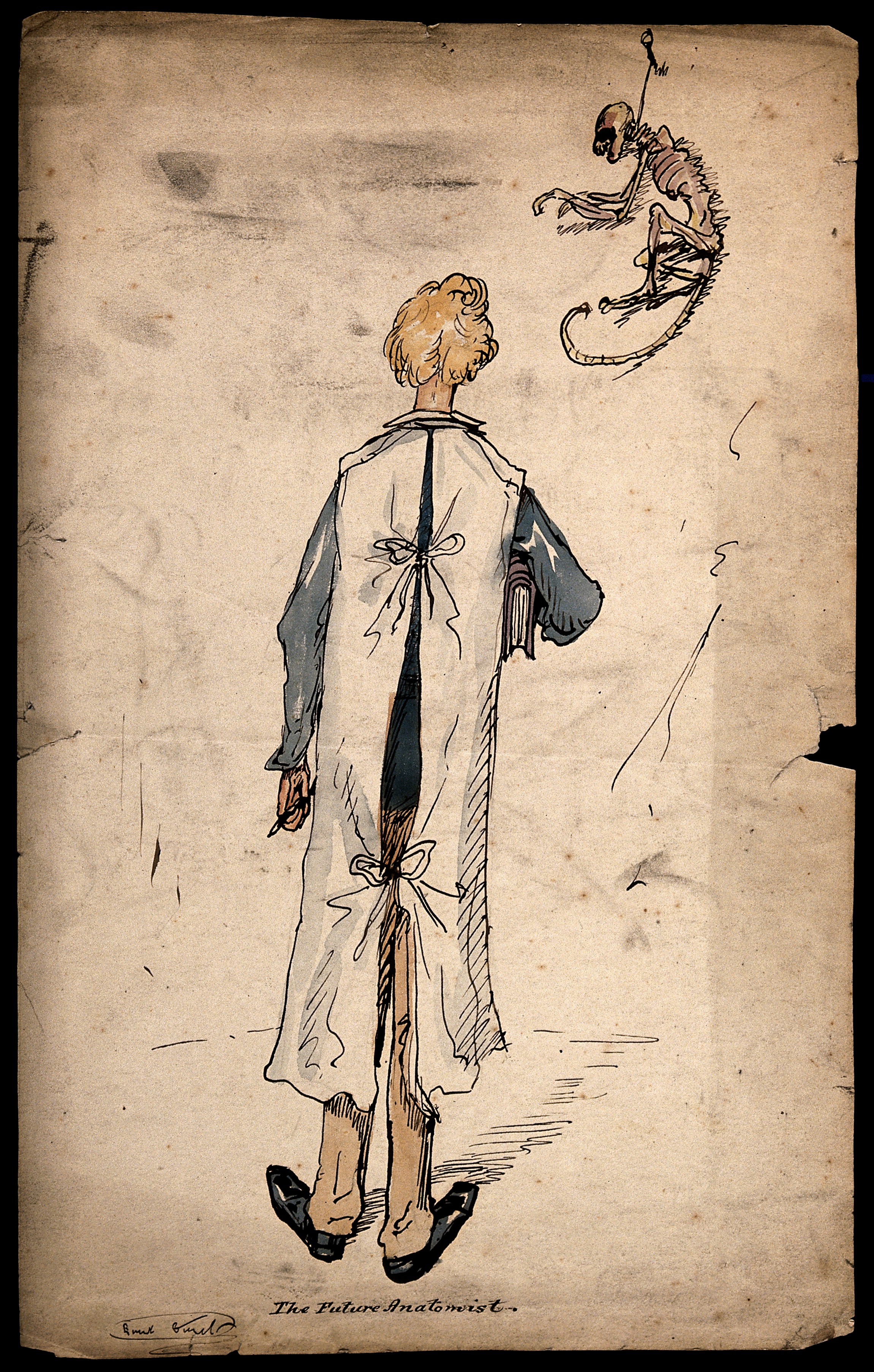
A historical drawing invites questions about dress, identity and the practical demands of putting on a gown.

Rear view of a student in a long gown tied at the back, with books under one arm and a small skeleton sketched above.

Figure 1 · Date unrecorded

The Future Anatomist

Find the ties and opening at the back. What actions would be easy to perform alone, and which might require help? This is a historical image of a student's gown, not a depiction of current protective equipment or a patient's gown. Compare the different purposes clothing can serve: protection, identification, access and dignity.

Ernst-Henry Griset · Wellcome Collection
Wellcome Library, London · V0011625 · CC BY 4.0

View full size ↗Download image
Collection record and reuse rights

Display copies are resized and compressed. Source and license links apply to the image above.

Explore more museum and archive collections →

Medicine · The Gown

Consider the experience of a designed object

Study a gown through a public image or fictional scenario. Ask about dignity, communication and use without assuming a patient's experience.

Try this

List design questions about fastening, coverage, movement and explanation. Turn assumptions into questions for users and care staff.

Reflect

Whose perspective would most change the design brief?

Take it further · optional follow-up

Sketch two fictional ways to explain the garment's features to a newcomer. List which questions would need input from users and care staff before evaluating the design.

Compare with another activity · Built Environment

The Threshold: Notice the moment of entry →

Prepared study prompt · not an editor-reviewed research article

Explore the perspectives

The eight prepared perspectives below are open to everyone. Sign in for expanded readings, a private notebook and collections.

Sign in for a deeper reading and notebook →

Historical

How did this evolve, and why has it endured?

Medical garments changed with hospital organization, hygiene practices and manufacturing. The familiar patient gown reflects institutional priorities, but its design has never been inevitable.

Human

How do people actually experience this?

Coverage, ease of dressing, comfort and freedom of movement influence a patient's experience. A garment that is convenient for an examination may feel exposing during ordinary movement through a ward.

Ethical

What responsibilities does this practice carry?

Clothing in care settings raises questions of dignity, choice and informed assistance. Design should account for people with different bodies, mobility and sensory needs.

Cultural

How have different societies approached this?

Expectations about modesty and acceptable clothing vary. A useful garment offers choices without assuming one standard of comfort for everyone.

Technical

How does it actually work?

Fastenings, openings, fabric properties and laundering requirements must support clinical access and practical use. A drawing can reveal construction but cannot establish comfort without user testing.

Debates

Where do thoughtful practitioners disagree?

Disposable and reusable garments involve tradeoffs in infection-control requirements, laundering, waste and cost. Appropriate choices depend on setting and evidence.

Economic

How has commerce shaped this?

Procurement costs, durability, laundry and staff time shape garment selection. The lowest purchase price may not reflect the full cost of use.

Ecological

How does it meet the living world?

Textile fiber, manufacture, washing and disposal contribute to environmental impact. Lifecycle comparisons should account for the number of uses and local laundering systems.