Skip to content
Hospitality

A topic from several perspectives

Apply this topic to your work →

The Guest Room

Explore the guest room through the perspectives below. Compare their examples and tradeoffs, then connect what you learn to your own work.

Illustrated study

Making room for rest

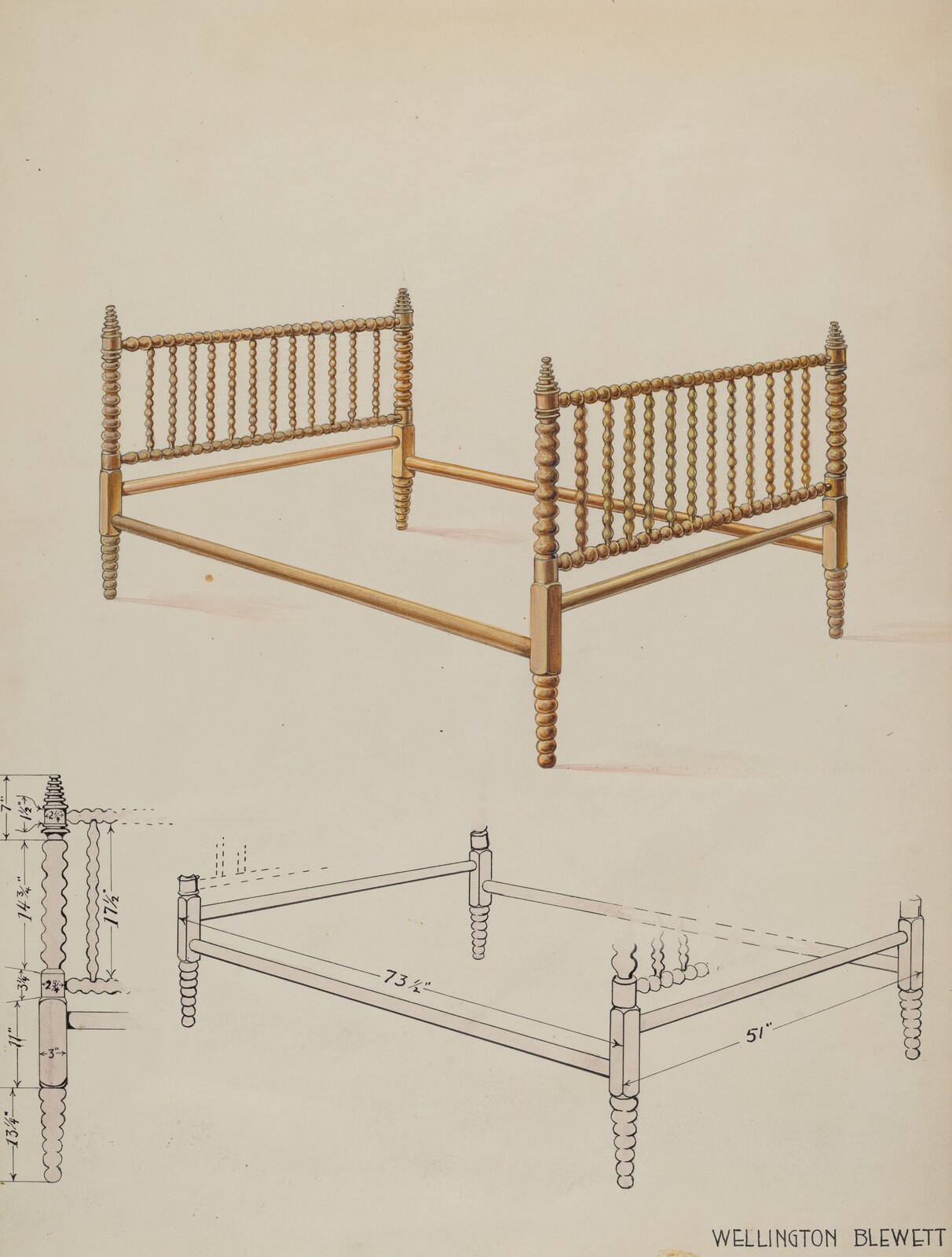
A measured drawing of a bed brings the practical scale of hospitality into view.

Watercolor study of a wooden bed with turned posts and spindles, above line drawings showing measurements and construction details.

Figure 1 · c. 1936

Bed

Compare the finished appearance above with the measurements below. This is a record of a bed, not a complete guest room: bedding, light, privacy and space to move remain to be considered. Imagine placing it in a room. What would a guest need within reach, and where would someone stand to make the bed?

Wellington Blewett · National Gallery of Art, Washington
Index of American Design · 1943.8.4002

View full size ↗Download image
Collection record and reuse rights

Display copies are resized and compressed. Source and license links apply to the image above.

Explore more museum and archive collections →

Hospitality · The Guest Room

Read the first five minutes

Imagine arriving in an unfamiliar room. Consider what needs to be immediately legible and what can be discovered later.

Try this

List the first five questions a guest may have and the visible cues that could answer them. Use a fictional room.

Reflect

Which instruction is missing because its author already knows the room?

Take it further · optional follow-up

Turn your five arrival questions into a short orientation card. Order them by when a guest might need the answer and remove unexplained local terms.

Compare with another activity · Graphic Design

The Grid: Make the underlying arrangement visible →
Connect this activity with other subjects

Follow a question through three activities, with a worked example and a worksheet for your observations.

  • Make arrival easier →

    Consider how spaces and words help someone find their way into an unfamiliar setting.

    This topic is activity 3 of 3.

Prepared study prompt · not an editor-reviewed research article

Explore the perspectives

The eight prepared perspectives below are open to everyone. Sign in for expanded readings, a private notebook and collections.

Sign in for a deeper reading and notebook →

Human

How do people actually experience this?

A guest room supports ordinary tasks in an unfamiliar place: sleeping, dressing, charging devices and finding belongings. Follow those tasks in sequence. A room can photograph beautifully while offering poor light or inconvenient storage.

Imagine arriving with a bag, a coat and a phone that needs charging. Trace where each goes before you sit down. If the only clear surface is occupied by decorative objects, the guest must rearrange the room to use it. Try the same sequence with two people and note where their needs compete.

Cultural

How have different societies approached this?

Expectations about privacy, beds, bathing and housekeeping differ among guests. Explain unfamiliar arrangements clearly without presenting one custom as the default for everyone. Choice can be more useful than an assumed universal preference.

Historical

How did this evolve, and why has it endured?

Guest accommodation has developed through many forms of domestic hosting and commercial lodging. A historic room should be read alongside records of who stayed and who worked there. Its furnishings alone tell only part of that story.

Economic

How has commerce shaped this?

Room decisions affect cleaning time, maintenance and replacement as well as the nightly rate. Fragile finishes may create repeated work behind an appealing image. Evaluate the room through the full cycle between guests.

Follow an imagined room between departure and the next arrival. List what must be cleaned, replenished, checked and repaired, including the time needed to move objects out of the way. Compare two bedside arrangements with the same guest essentials but different numbers of loose decorative pieces. Ask staff which details add work and which help them do it.

Aesthetic

What makes it beautiful, meaningful, or enduring?

Light, proportion, texture and the placement of furniture shape the room's atmosphere. Too many decorative objects can occupy useful surfaces. Judge visual coherence together with the ease of settling in.

Ethical

What responsibilities does this practice carry?

Privacy, truthful descriptions and accessible provision are central responsibilities. Staff need safe working conditions and guests need clear ways to request help. Hospitality depends on both sides of that relationship.

Ecological

How does it meet the living world?

Heating, cooling, laundry and replacement goods contribute to a room's resource use. Controls should be understandable and maintenance effective. Environmental claims need evidence about actual operation rather than the presence of a conservation message.

Debates

Where do thoughtful practitioners disagree?

Standardization can create predictable comfort, while local character can make a stay distinctive. Neither requires sacrificing basic usability. Compare which details should remain consistent and where variation adds value.