Skip to content
Medicine

A topic from several perspectives

Apply this topic to your work →

The Bedside

Explore the bedside through the perspectives below. Compare their examples and tradeoffs, then connect what you learn to your own work.

Illustrated study

Attention in a room of care

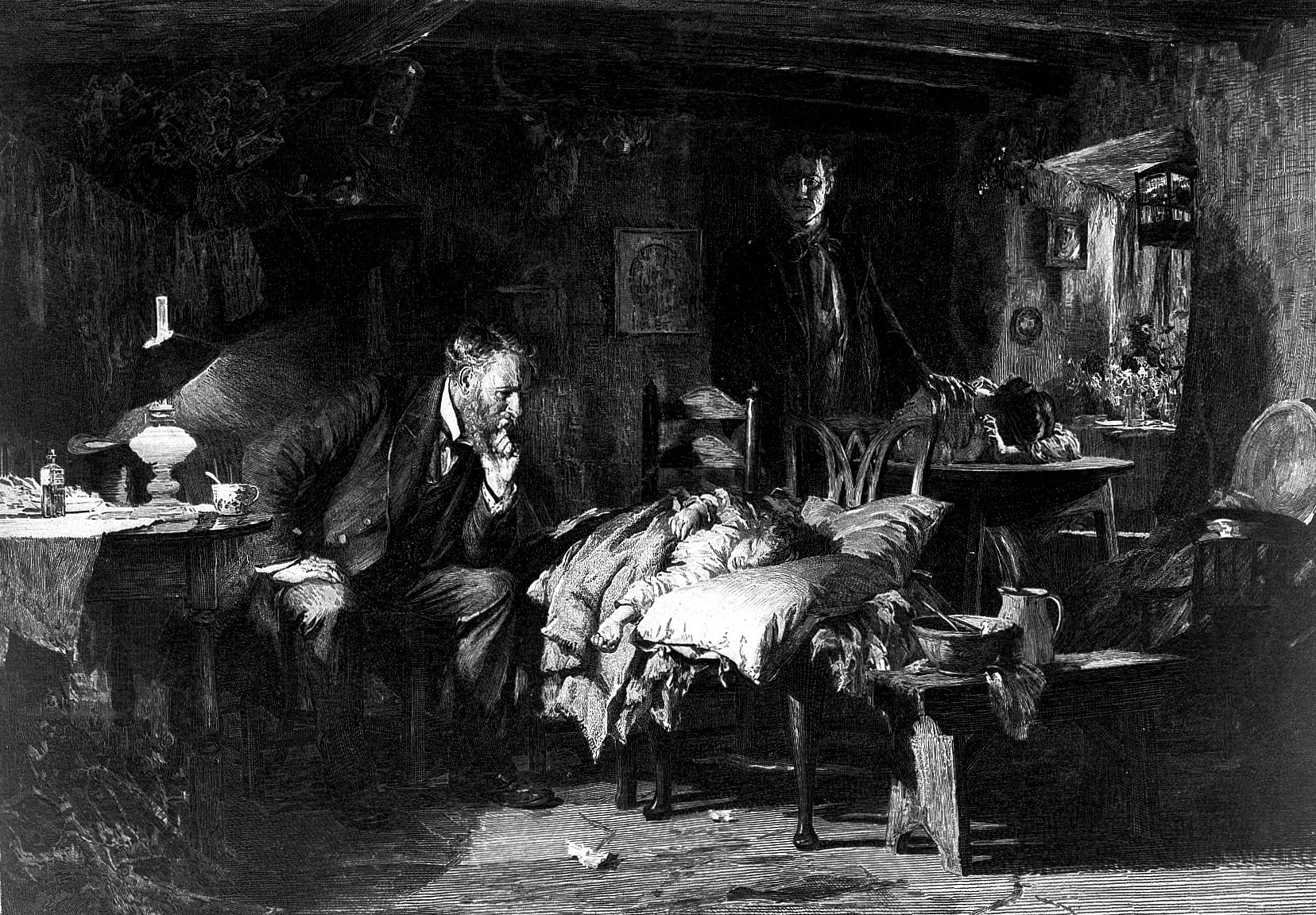
An etching places a physician, a child and waiting adults within a domestic room.

Black-and-white etching of a doctor leaning toward a child lying across chairs, with a lamp at the left and two adults waiting in the dim background.

Figure 1 · After Fildes’s 1891 painting

The Doctor

Follow the doctor’s gaze toward the child, then notice the adults waiting behind them. Light and posture make attention the center of the scene. This is an artistic image of care from a particular period. What does the arrangement reveal about watching, waiting and the people who share a room with someone who is ill?

Léon Salles, after Luke Fildes · Wellcome Collection
Wellcome Collection · L0006430 · CC BY 4.0 · reproduction via Wikimedia Commons, unchanged

View full size ↗Download image
Collection record and reuse rights

Display copies are resized and compressed. Source and license links apply to the image above.

Explore more museum and archive collections →

Medicine · The Bedside

Read a care encounter for communication

Use a fictional dialogue to consider how questions, interruptions and explanations shape a conversation about care.

Try this

Write a short invented exchange, then mark where the speaker checks understanding or invites a concern. Include no patient information.

Reflect

What could be asked without assuming what the other person feels?

Take it further · optional follow-up

Revise the fictional exchange so the listener can explain the next step in their own words. Compare the wording without judging a real care encounter.

Compare with another activity · Hospitality

The Welcome: Write the next useful sentence →

Prepared study prompt · not an editor-reviewed research article

Explore the perspectives

The eight prepared perspectives below are open to everyone. Sign in for expanded readings, a private notebook and collections.

Sign in for a deeper reading and notebook →

Historical

How did this evolve, and why has it endured?

The bedside has been a central setting for observation and care, although hospitals, home nursing and clinical roles have changed greatly. Historical images often present an idealized scene and should be read alongside records of actual practice.

Human

How do people actually experience this?

Bedside care involves listening, explaining, observing and responding to a person's circumstances. The arrangement of chairs, lighting, privacy and equipment affects communication as well as practical care.

Ethical

What responsibilities does this practice carry?

Dignity, consent, confidentiality and the person's own preferences matter at the bedside. Family members and caregivers may contribute knowledge, but the patient should not disappear from decisions about their care.

Cultural

How have different societies approached this?

Expectations about visitors, touch, personal space and family involvement vary across communities and individuals. Good care asks rather than assumes what is welcome.

Technical

How does it actually work?

Observation at the bedside may combine symptoms reported by the patient, measurements, examination and documented changes. Each has different limits, and careful records distinguish observed facts from interpretations.

Debates

Where do thoughtful practitioners disagree?

Clinical efficiency and sustained human attention can be in tension. Research into communication and staffing should be interpreted with attention to setting, outcomes and the experience of patients and professionals.

Economic

How has commerce shaped this?

Time, staffing, room design and access to equipment shape bedside care. A seemingly small improvement in communication may require organizational support rather than an additional device.

Ecological

How does it meet the living world?

Light, noise, temperature and air quality affect the environment in which care occurs. Design decisions should be evaluated for comfort, infection prevention and the needs of different patients.