Skip to content
Medicine

A topic from several perspectives

Apply this topic to your work →

The Stethoscope

Explore the stethoscope through the perspectives below. Compare their examples and tradeoffs, then connect what you learn to your own work.

Illustrated study

An instrument for listening

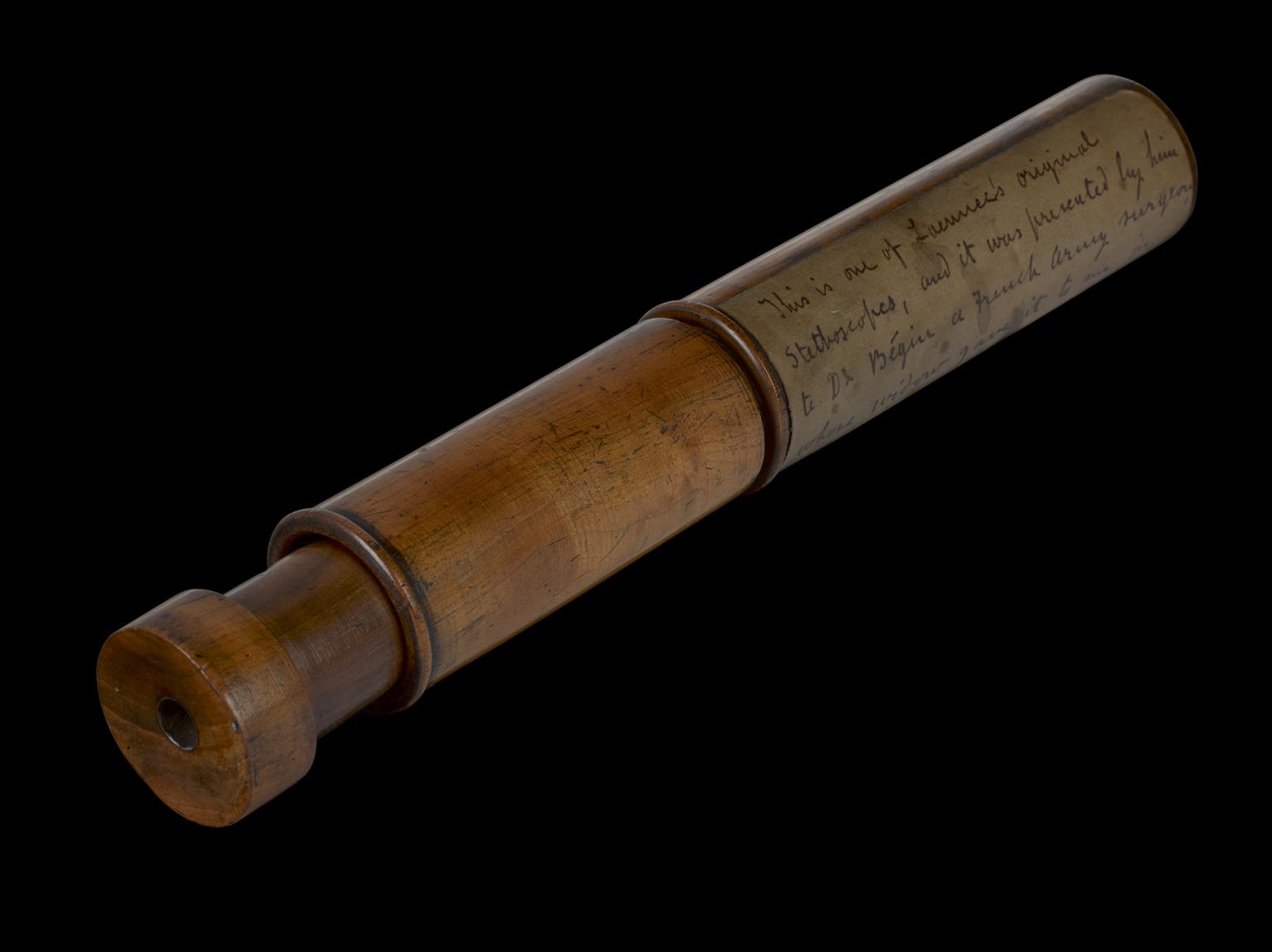
A wooden stethoscope attributed to Laennec lets us study an early form of an instrument now widely recognized.

A turned wooden stethoscope with a flared end, displayed horizontally on a grey background.

Figure 1 · 1815–1825

Laennec’s stethoscope

Follow the wooden form from one end to the other. Compare its shape with a familiar two-ear stethoscope: which parts can you identify visually, and which functions need an explanation? Its appearance does not establish what a listener heard or how that sound was interpreted.

René Théophile Hyacinthe Laennec; photograph by Science Museum Group Studio · Science Museum Group / Sir Henry Wellcome’s Museum Collection
Science Museum Group Studio · via Wikimedia Commons · CC BY-SA 4.0

View full size ↗Download image
Collection record and reuse rights

Display copies are resized and compressed. Source and license links apply to the image above.

Explore more museum and archive collections →

Medicine · The Stethoscope

Study an instrument and the attention around it

A stethoscope brings an instrument, a listener and a person being examined into a relationship. Begin with the historical wooden example: identify what can be learned from its form and what depends on its collection record. Then consider the explanation and consent that surround its use. This study concerns design and communication, not interpreting body sounds.

Try this

Sketch the historical instrument from its photograph. Label visible features separately from functions described in the museum record. Draft two sentences explaining an imagined examination without claiming a clinical result.

Reflect

What does the instrument make available to the listener, and what can only be learned by speaking with the person?

Take it further · optional follow-up

Compare the instrument's museum description with its appearance in a fictional medical portrait. Separate what identifies a professional role from what demonstrates how an instrument works.

Compare with another activity · Medicine

The Bedside: Read a care encounter for communication →

Prepared study prompt · not an editor-reviewed research article

Explore the perspectives

The eight prepared perspectives below are open to everyone. Sign in for expanded readings, a private notebook and collections.

Sign in for a deeper reading and notebook →

Historical

How did this evolve, and why has it endured?

René Laennec developed the stethoscope in 1816. Early wooden instruments used one listening end; their form looks quite different from the flexible, two-ear instrument familiar today. The museum example makes this change tangible. Studying an instrument's history also means asking how people learned to describe, compare and teach what they heard.

Human

How do people actually experience this?

Listening through an instrument and listening to a person are different forms of attention that meet in an examination. Imagine an encounter in which the practitioner explains the next step, pauses for a question and then listens. Compare it with the same actions performed without explanation. The object alone cannot reveal the quality of that exchange.

Ethical

What responsibilities does this practice carry?

An instrument does not remove the need to explain contact, respect privacy and respond to discomfort. Consider the difference between gaining access to a sound and gaining permission to examine someone. If sound is recorded or shared for teaching, the account must also address whose information it is and how its use is agreed.

Cultural

How have different societies approached this?

A stethoscope can announce a professional role before it is used. In a portrait, advertisement or museum display, ask what the object invites viewers to assume about knowledge and authority. Compare that visual shorthand with the less visible work of listening, explaining and coordinating care. Recognition of a symbol is not evidence of competence.

Technical

How does it actually work?

An acoustic stethoscope provides a path for body sounds to reach the listener's ears. Compare the visible listening ends and connecting body of the wooden instrument with a modern example. Shape and materials are useful starting points, but a photograph cannot establish acoustic performance. Hearing a sound and interpreting its significance are separate tasks.

Debates

Where do thoughtful practitioners disagree?

When comparing an acoustic instrument with a device that records or processes sound, define the purpose first. Is the aim teaching, sharing an observation or supporting an examination? Ask what would count as a useful comparison, which users were involved and what additional training is required. More available information does not explain itself.

Economic

How has commerce shaped this?

Consider the instrument as something purchased, maintained and used over time. An acquisition decision might include replacement parts, cleaning requirements, staff familiarity and repair support alongside price. A more elaborate device may introduce software or charging needs. Compare the complete working arrangement rather than treating the purchase price as the whole cost.

Ecological

How does it meet the living world?

Follow an instrument from its materials to its eventual replacement. Which parts wear out, can be replaced or are permanently joined? A durable case may outlast a damaged flexible part. Compare repair information and disposal arrangements before making environmental claims; the visible amount of material is only one part of its life.