Skip to content
Conservation

A topic from several perspectives

Apply this topic to your work →

The Patina

Explore the patina through the perspectives below. Compare their examples and tradeoffs, then connect what you learn to your own work.

Illustrated study

Reading a surface with care

A small Egyptian figure invites close attention to color, texture and the limits of visual evidence.

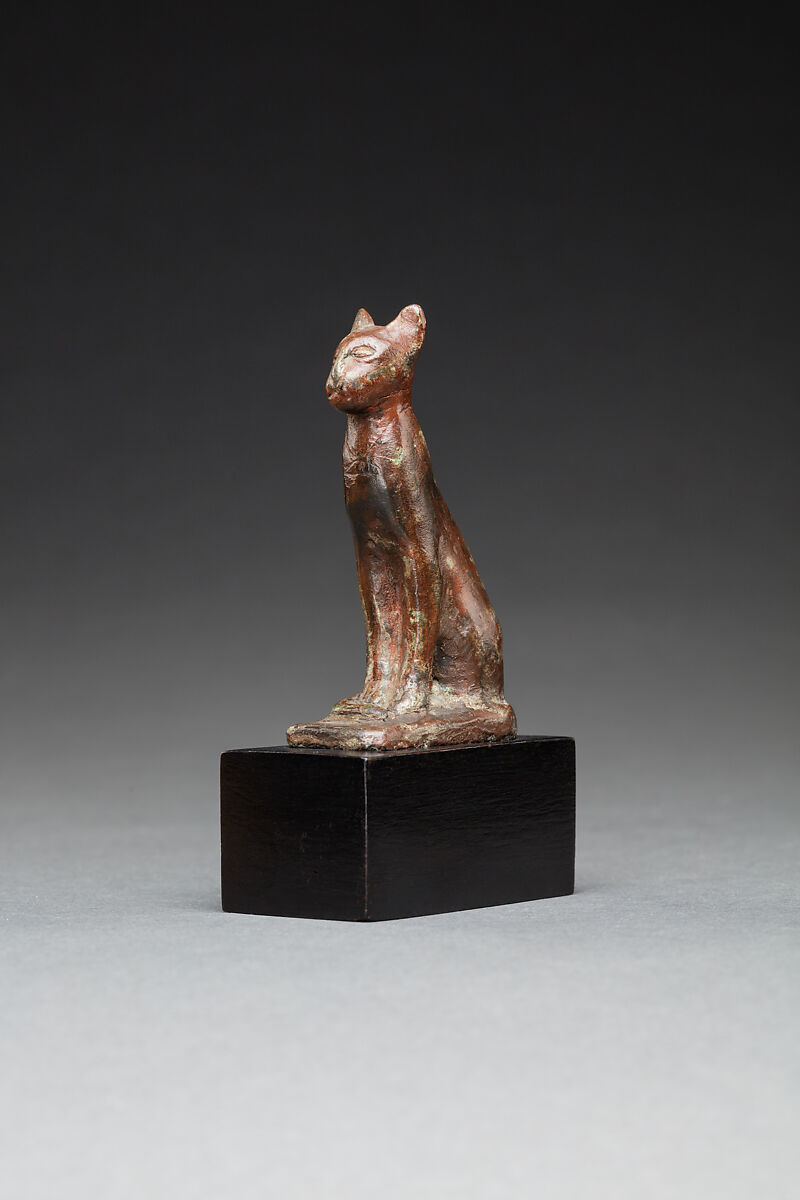
Small seated Egyptian cat figure with a mottled brown, reddish and greenish metal surface, displayed on a dark rectangular mount.

Figure 1 · 664–30 BCE

Figure of a Seated Cat

Look at the shifts of color along the ears, chest and feet. This copper-alloy figure belongs to an Egyptian tradition in which cats were associated with the protective goddess Bastet. Its surface is part of the object we encounter today, but a photograph alone cannot tell us how every mark formed or which areas have been treated. What would you record before asking a conservator about its condition?

Egyptian; maker unrecorded · The Metropolitan Museum of Art
Bequest of Nanette B. Kelekian, 2020 · 2021.41.166

View full size ↗Download image
Collection record and reuse rights

Display copies are resized and compressed. Source and license links apply to the image above.

Explore more museum and archive collections →

Conservation · The Patina

Describe before valuing

Use a photograph to study a changed surface. Words such as damage, age and character can contain judgments as well as observations.

Try this

Describe color, texture and location of visible changes without cleaning or treating the object.

Reflect

What history or material knowledge would be needed before deciding what to preserve?

Take it further · optional follow-up

Write two captions for the photographed surface: a description and a value judgment. Identify the evidence each judgment would need before informing a preservation decision.

Compare with another activity · Property & Renewal

Repair: Define what success means →
Connect this activity with other subjects

Follow a question through three activities, with a worked example and a worksheet for your observations.

  • Notice change over time →

    Compare observations without treating every difference as evidence of the same cause.

    This topic is activity 2 of 3.

Prepared study prompt · not an editor-reviewed research article

Explore the perspectives

The eight prepared perspectives below are open to everyone. Sign in for expanded readings, a private notebook and collections.

Sign in for a deeper reading and notebook →

Historical

How did this evolve, and why has it endured?

Surfaces acquire changes through use, exposure and earlier treatments. The value placed on patina has shifted across collecting, architecture and conservation traditions.

Ecological

How does it meet the living world?

Moisture, air chemistry, pollutants and local conditions influence how surfaces change. The same alloy may weather differently in sheltered and exposed locations.

Ethical

What responsibilities does this practice carry?

Cleaning or removing a surface can erase historical evidence. Decisions should be documented and guided by the object's significance and condition.

Material

What is it made of, and why does that matter?

Patina is a broad descriptive term, not one chemical substance. Copper alloys, stone, wood and other materials develop different surface changes through different processes.

Cultural

How have different societies approached this?

Signs of age may be valued as evidence of use, craftsmanship or continuity. Other contexts prize a polished appearance; conservation must account for the object's meanings.

A polished commemorative object and a weathered architectural surface may carry different expectations of care. Ask what people value about the particular object before assuming that an appearance of age is either desirable or unwanted. Record those meanings alongside condition evidence.

Human

How do people actually experience this?

Close observation of color, texture and location can generate useful questions. Photographs alone cannot reliably identify every corrosion product or previous treatment.

Photograph an object from a consistent position and describe where a color or texture occurs. A darker area at a frequently handled edge raises a different question from an isolated patch elsewhere. Location provides context, but identifying the process still requires appropriate examination.

Debates

Where do thoughtful practitioners disagree?

When should an altered surface be stabilized, cleaned or left alone? The answer depends on active deterioration, historical evidence and the intended future use.

Future

Where might this be heading?

Regular condition records can reveal whether a surface is stable or changing. Monitoring supports proportionate intervention instead of automatic cleaning.