Skip to content
Conservation

A topic from several perspectives

Apply this topic to your work →

Restoration

Explore restoration through the perspectives below. Compare their examples and tradeoffs, then connect what you learn to your own work.

Illustrated study

Reconstructing a pattern

A restoration drawing made from reassembled fragments raises questions about evidence and interpretation.

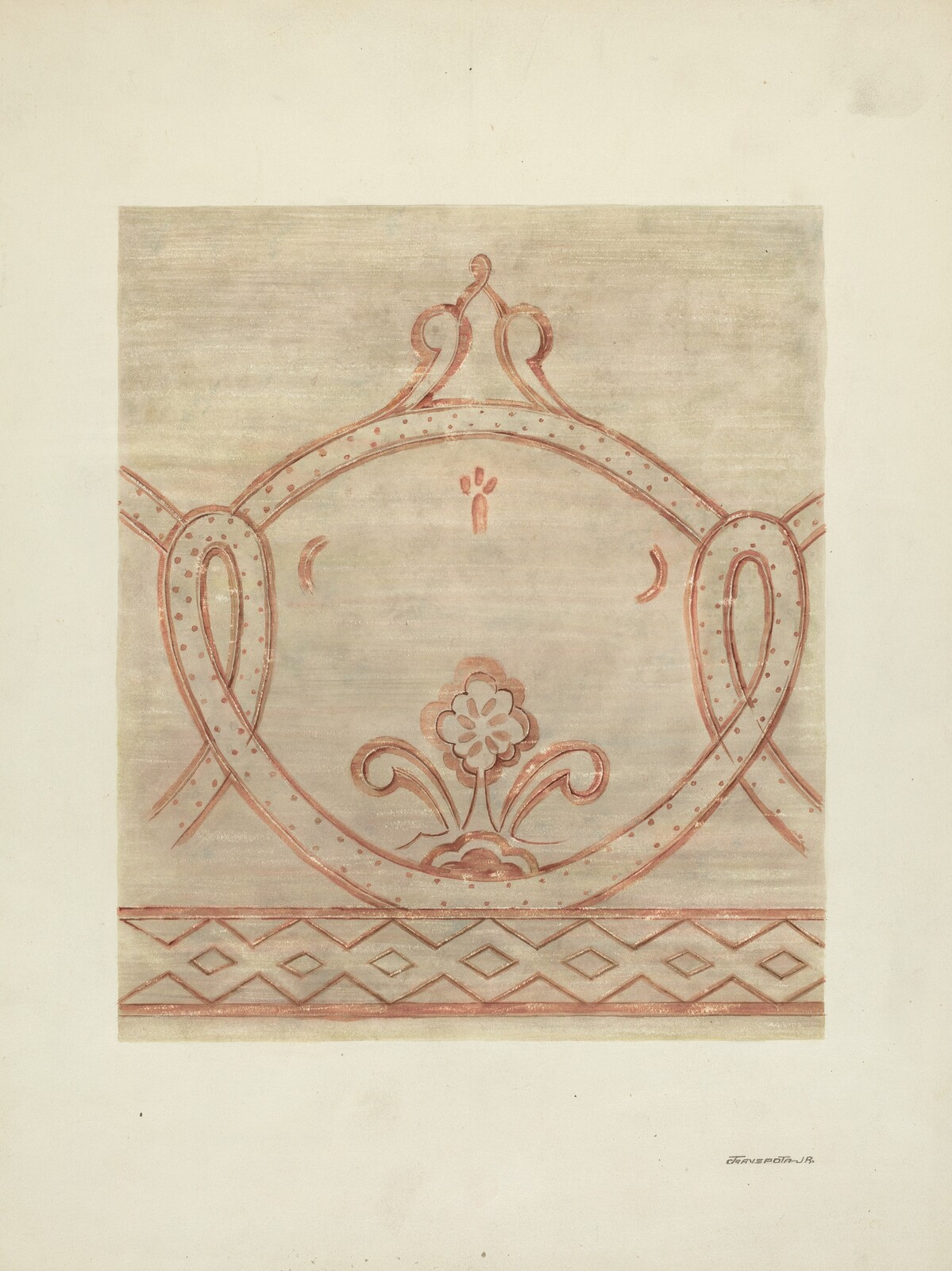
Watercolor and pencil restoration drawing of a red scrolling floral wall pattern on a muted ground, above a band of diamond shapes.

Figure 1 · c. 1940

Wall Painting, Restoration Drawing from Reassembled Fragments

Trace the repeated curves and the border below. The title tells us that fragments informed this drawing; the finished sheet alone does not show where every fragment ended or how gaps were interpreted. What additional photographs, notes or diagrams would help you distinguish surviving evidence from a reconstruction?

Gerald Transpota · National Gallery of Art, Washington
Index of American Design · 1943.8.6517

View full size ↗Download image
Collection record and reuse rights

Display copies are resized and compressed. Source and license links apply to the image above.

Explore more museum and archive collections →

Conservation · Restoration

Compare possible aims

Choose a public restoration account and identify what its authors say they intended to retain, reveal or change.

Try this

Separate the stated aim, documented intervention and your own response. Note whether alternatives are discussed.

Reflect

Which decision depends most on the chosen aim?

Take it further · optional follow-up

Write a second possible aim for the same documented project. Describe how that aim could change the questions asked, without proposing treatment of the object.

Compare with another activity · Property & Renewal

Repair: Define what success means →

Prepared study prompt · not an editor-reviewed research article

Explore the perspectives

The eight prepared perspectives below are open to everyone. Sign in for expanded readings, a private notebook and collections.

Sign in for a deeper reading and notebook →

Historical

How did this evolve, and why has it endured?

Restoration practices have changed as ideas about authenticity, evidence and the value of later alterations developed. Earlier interventions may themselves become part of an object's history.

Ecological

How does it meet the living world?

Repair and continued use can reduce demand for replacement materials, but treatments may consume energy or introduce harmful substances. Environmental choices depend on the specific intervention.

Ethical

What responsibilities does this practice carry?

Restoration decisions should disclose what is original, what is reconstructed and what remains uncertain. Reversibility and minimal intervention are important considerations, though not always fully achievable.

Material

What is it made of, and why does that matter?

Cleaning, consolidation and replacement affect materials differently. Identifying composition, previous treatments and current condition is essential before selecting a method.

Cultural

How have different societies approached this?

Objects and buildings can hold meanings that extend beyond their appearance. Communities may value evidence of use or change that a visually uniform restoration would erase.

Human

How do people actually experience this?

Conservators combine research, manual skill and careful documentation. Consultation with owners, users and affected communities can change what successful care means.

An owner may want an object to look new, while a conservator sees wear that documents its use. Discuss the desired outcome before choosing a treatment. Photographs and a written account of the decision help future caretakers understand why some changes were retained.

Debates

Where do thoughtful practitioners disagree?

Should a work be returned toward an earlier state or retain visible evidence of later history? The answer depends on significance, evidence, condition and the consequences of intervention.

Imagine a missing section of a decorative pattern. Repeating the surviving motif may produce a plausible whole, but plausibility is not evidence that the lost section looked that way. Distinguish surviving material, supported reconstruction and conjecture in both the intervention and its explanation.

Future

Where might this be heading?

Good restoration records help later caretakers understand what was changed and why. Monitoring can be as important as the initial treatment.