Skip to content
Property & Renewal

A topic from several perspectives

Apply this topic to your work →

Repair

Explore repair through the perspectives below. Compare their examples and tradeoffs, then connect what you learn to your own work.

Illustrated study

The tools behind a repair

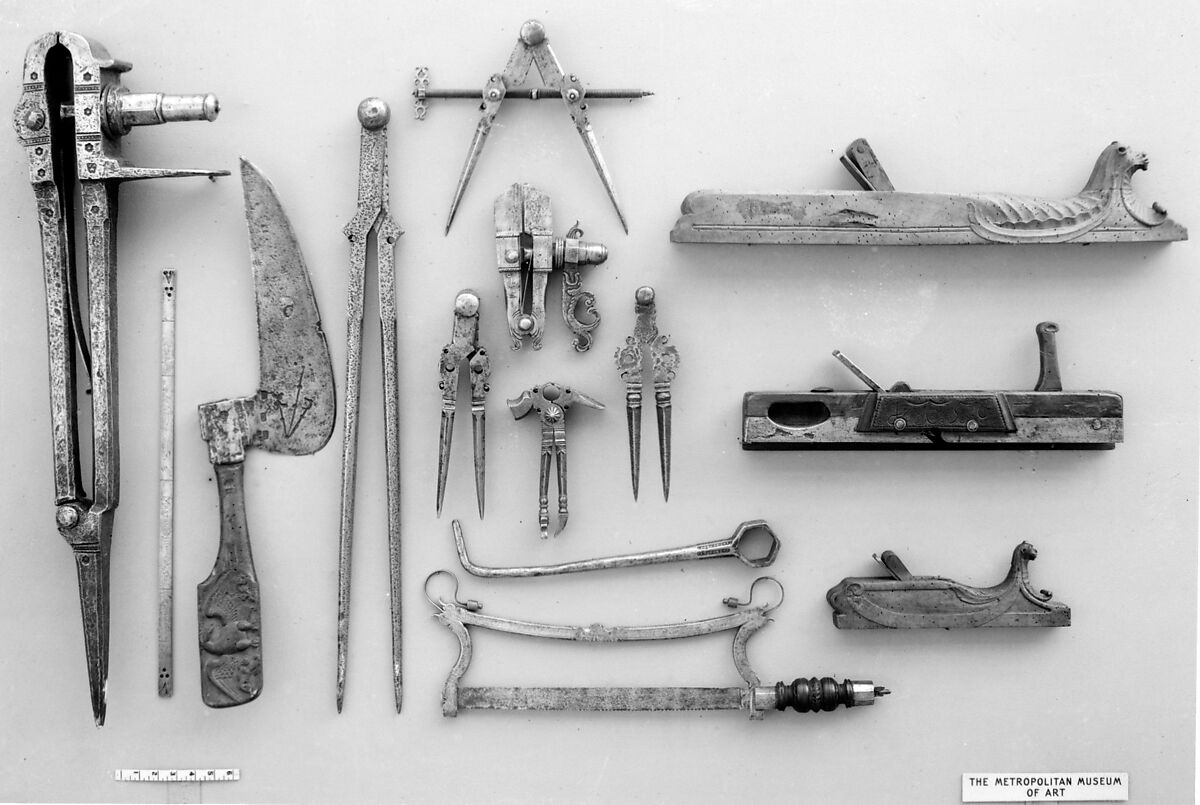
An archival photograph brings together tools for measuring, holding and shaping material.

Black-and-white collection photograph of decorated metal tools, including vises, dividers, saws and planes, arranged against a plain background.

Figure 1 · Vise: early 18th century

Workshop tools, including a vise

Look for edges that cut, points that measure and jaws that hold. The museum’s vise record supplies this group photograph; the date given here describes that catalogued object, not every tool shown. Repair also begins with choosing how to inspect, support and work on existing material. Which of those tasks would come first when assessing a damaged object?

Makers unrecorded; vise possibly German · The Metropolitan Museum of Art
Image associated with Vise, 91.16.11a, b · Gift of R. Stuyvesant, 1891

View full size ↗Download image
Collection record and reuse rights

Display copies are resized and compressed. Source and license links apply to the image above.

Explore more museum and archive collections →

Learn from an example

When a harder repair material causes damage

The National Park Service explains how softer mortar in historic masonry provides a replaceable path for moisture and salts. Hard modern mortar can be incompatible with softer historic brick.

What it helps you understand

Material strength by itself is an incomplete measure of suitability. A repair has to work with the existing wall, including how its materials handle moisture.

Bring it to your work

Before specifying a repair, identify what is known about the existing brick and mortar and what needs a qualified assessment. This example explains the decision; it is not a mortar specification.

Property & Renewal · Repair

Define what success means

A repair can be judged by several aims: continued use, appearance, retained material or ease of future care. State the aim before comparing options.

Try this

Choose an ordinary repair example. Write two possible goals and the evidence you would use to judge each.

Reflect

Would the same intervention satisfy both goals?

Take it further · optional follow-up

Write a short acceptance description for each imagined goal. Include what you could observe afterward and what would require specialist verification.

Compare with another activity · Manufacturing

Tolerance: Define acceptable variation →
Connect this activity with other subjects

Follow a question through three activities, with a worked example and a worksheet for your observations.

  • Notice change over time →

    Compare observations without treating every difference as evidence of the same cause.

    This topic is activity 3 of 3.

Prepared study prompt · not an editor-reviewed research article

Explore the perspectives

The eight prepared perspectives below are open to everyone. Sign in for expanded readings, a private notebook and collections.

Sign in for a deeper reading and notebook →

Material

What is it made of, and why does that matter?

Repair begins with understanding the existing material and why it changed. Compatible replacements and treatments matter because new work interacts with what remains.

Technical

How does it actually work?

Diagnose the cause before choosing a method. Tools that hold, measure and shape materials support repair, but the appropriate intervention depends on the specific assembly.

Economic

How has commerce shaped this?

A timely repair may avoid larger costs, yet repeated patching without addressing the cause can waste resources. Compare lifecycle costs and disruption.

Ethical

What responsibilities does this practice carry?

Repair decisions should consider safety, accurate disclosure and the interests of occupants. Work on significant historic fabric may require additional care and permissions.

Human

How do people actually experience this?

Experienced tradespeople often recognize patterns of wear and failure that photographs alone cannot explain. Their practical knowledge deserves documentation and scrutiny.

Ask a craftsperson to explain what led them to a proposed repair: the direction of a crack, an earlier patch, a loose joint or a change in surface. Recording that reasoning makes practical knowledge useful to the next caretaker. It also gives others a clear basis for questioning or checking the proposal.

Historical

How did this evolve, and why has it endured?

Buildings accumulate repairs and adaptations. Those changes can be evidence of use, available materials and changing expectations.

Two patches in the same surface may record different episodes of care. Matching every repair to a single uniform finish can remove evidence of those changes. Before altering a visible patch, document its location and appearance and establish whether its history matters to the project.

Ecological

How does it meet the living world?

Repair can extend useful life and reduce replacement demand. Environmental benefit depends on materials, durability and whether the underlying problem is solved.

Lessons & Failures

What has humanity learned the hard way?

Incompatible materials, trapped moisture and incomplete diagnosis can worsen damage. Document what was changed so later caretakers understand the work.