Skip to content
Conservation

A topic from several perspectives

Apply this topic to your work →

The Seed Bank

Explore the seed bank through the perspectives below. Compare their examples and tradeoffs, then connect what you learn to your own work.

Illustrated study

More than one kind of radish

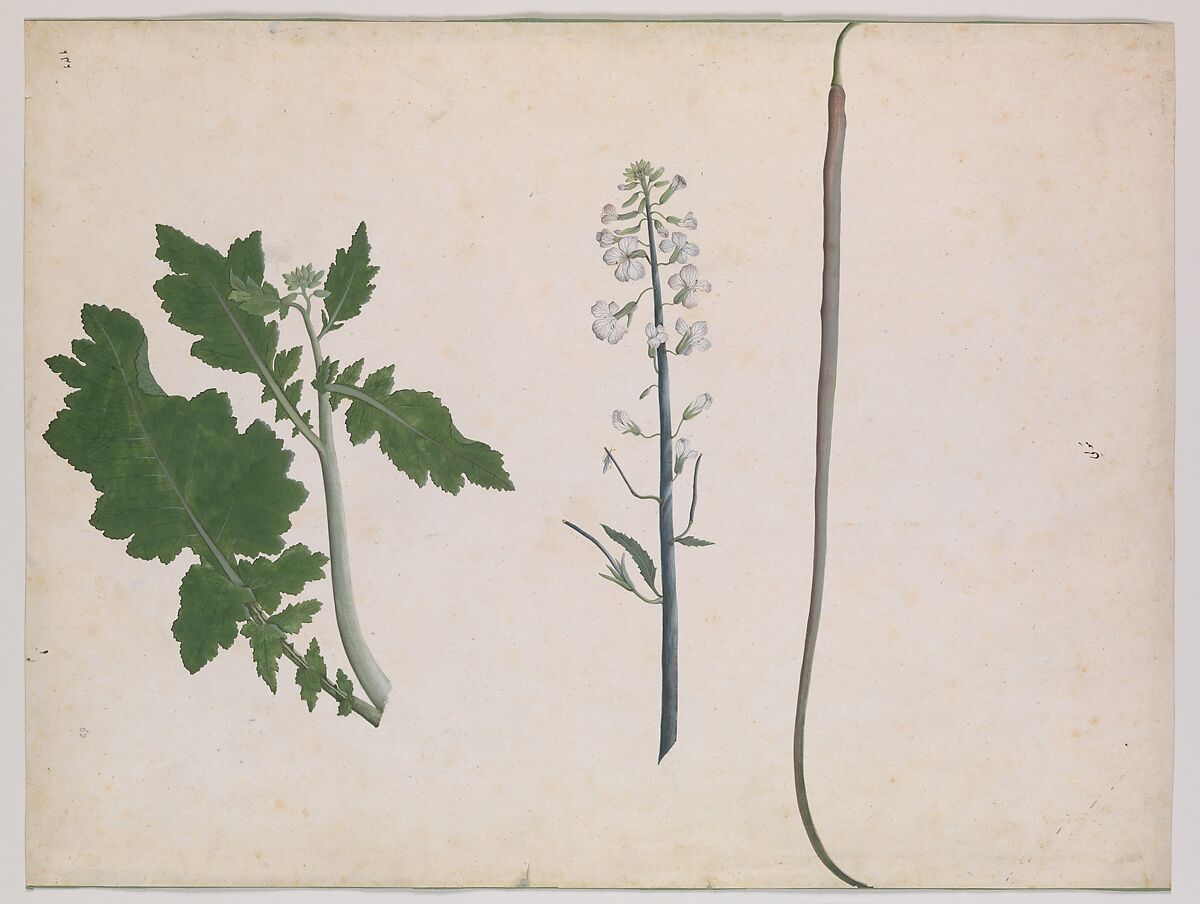
A botanical painting from India opens a question about which forms of a crop we know—and which we preserve.

Botanical painting with a leafy radish stem at left, a flowering stem at center and a long slender pod at right, with small handwritten annotations.

Figure 1 · Late 18th century

A Radish Plant, Seed, and Flower

Compare the leaves, flowers and long pod. The Met identifies this as a radish grown for its pods, rather than the familiar swollen root. The painting records visible features; a seed collection has a different task, keeping living material and its identity for future use. What information about origin, variety and growing conditions would you want to keep alongside a packet of seeds?

Artist unrecorded; made in Calcutta, India · The Metropolitan Museum of Art
Purchase, Friends of Islamic Art Gifts, 2007 · 2007.289

View full size ↗Download image
Collection record and reuse rights

Display copies are resized and compressed. Source and license links apply to the image above.

Explore more museum and archive collections →

Conservation · The Seed Bank

Read a preservation record

Use public information about a seed collection to study its stated purpose and documentation. Do not infer growing or storage requirements from the name alone.

Try this

Identify the information supplied about origin, collection date and intended use, then list what remains unclear.

Reflect

What would a future researcher need to know to interpret the record?

Take it further · optional follow-up

Compare two public records for the fields they provide. Explain which comparison is possible and which would be misleading because the records use different descriptions.

Compare with another activity · Conservation

The Specimen: Keep context with the object →

Prepared study prompt · not an editor-reviewed research article

Explore the perspectives

The eight prepared perspectives below are open to everyone. Sign in for expanded readings, a private notebook and collections.

Sign in for a deeper reading and notebook →

Historical

How did this evolve, and why has it endured?

Seed collections have supported agriculture and botanical study in different forms for generations. Modern seed banks document origins and traits to support research and conservation.

Ecological

How does it meet the living world?

Seed diversity can contribute to ecological resilience, but a stored sample is not the same as a living population in its habitat. Conservation may require both ex situ storage and protection of ecosystems.

Ethical

What responsibilities does this practice carry?

Collection and use of seeds raise questions about community knowledge, access and benefit-sharing. Legal and ethical responsibilities vary by species, location and origin.

Material

What is it made of, and why does that matter?

Seeds differ in moisture tolerance, longevity and storage needs. Some species cannot be preserved using conventional dry, cold seed-bank methods.

Cultural

How have different societies approached this?

Seeds carry agricultural knowledge, food traditions and relationships to place. A collection record should preserve relevant provenance and avoid erasing the people who maintained varieties.

A locally maintained variety may be associated with a particular dish, growing practice or community name. Recording only a standardized identifier can lose that knowledge. Preserve attributed accounts of use alongside the collection's scientific description, with appropriate agreement about how the information may be shared.

Human

How do people actually experience this?

Collectors, farmers, botanists and curators contribute distinct knowledge. A seed sample becomes more useful when its origin and handling history can be understood.

Two samples with the same common name may come from different places and collection dates. A clear record lets a later user distinguish them and understand how each was handled. The label is part of the sample's usefulness, rather than an administrative detail added after the important work.

Debates

Where do thoughtful practitioners disagree?

Ex situ collections can safeguard genetic material but may not preserve adaptation occurring in living environments. Resource allocation and representation remain important questions.

Future

Where might this be heading?

Long-term viability requires monitoring, regeneration and accurate records. Climate change increases the importance of conserving diversity while complicating decisions about future growing conditions.