Skip to content
Conservation

A topic from several perspectives

Apply this topic to your work →

The Field Note

Explore the field note through the perspectives below. Compare their examples and tradeoffs, then connect what you learn to your own work.

Illustrated study

A sketch that keeps an observation

An annotated chalk study brings drawing and written reminders together on one small sheet.

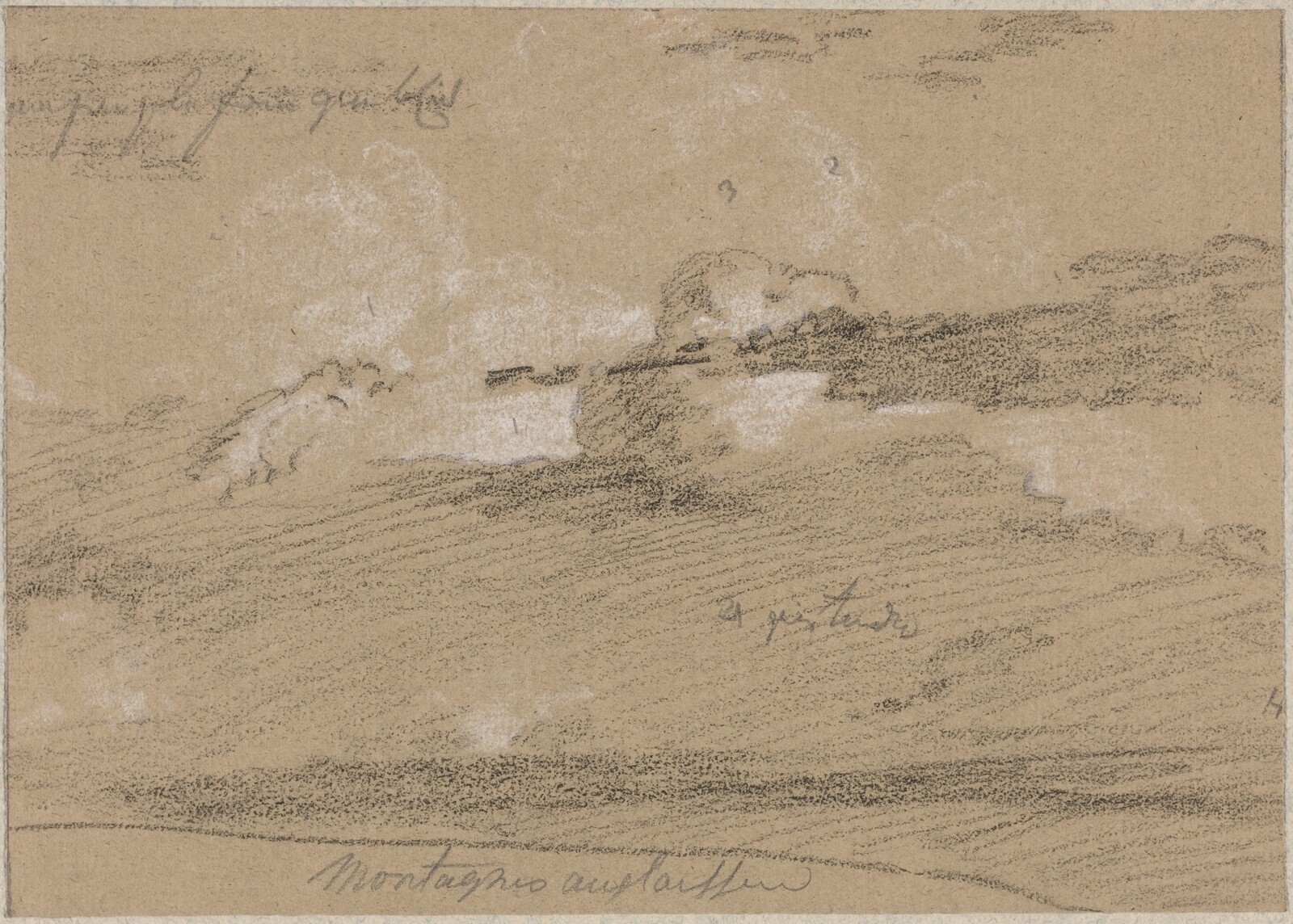
Black and white chalk cloud study on brown paper, with a low mountain outline, numbers and handwritten annotations.

Figure 1 · 1820s/1830s

Study of Clouds above the Mountains

Notice the white chalk, darker strokes and handwritten marks. Together they preserve more than an outline, yet some annotations remain difficult to read. Use the sheet as a comparison for a field note: what date, place, conditions and labels would make your own observation useful to someone who was not there?

Jean Antoine Linck · National Gallery of Art, Washington
Gift of Andrew and Pauline Robison · 2007.140.2

View full size ↗Download image
Collection record and reuse rights

Display copies are resized and compressed. Source and license links apply to the image above.

Explore more museum and archive collections →

Conservation · The Field Note

Write for a later comparison

Choose a harmless everyday observation. Make the time, place and viewpoint clear while separating description from interpretation.

Try this

Write a short note, revisit the scene and ask whether the same features can be compared.

Reflect

What did your first note omit because it seemed obvious at the time?

Take it further · optional follow-up

Give your note to a reader and ask what they could reliably compare on a later visit. Add the missing viewpoint or conditions to a revised version.

Compare with another activity · Landscape

Seasonal Change: Make a repeatable observation →
Connect this activity with other subjects

Follow a question through three activities, with a worked example and a worksheet for your observations.

Prepared study prompt · not an editor-reviewed research article

Explore the perspectives

The eight prepared perspectives below are open to everyone. Sign in for expanded readings, a private notebook and collections.

Sign in for a deeper reading and notebook →

Historical

How did this evolve, and why has it endured?

Field notebooks have recorded observations across natural history, exploration and professional practice. Their formats reflect the questions and instruments of their time.

Ecological

How does it meet the living world?

Dated observations can reveal seasonal or environmental change when location and methods are consistent. A single note rarely establishes a long-term trend.

Ethical

What responsibilities does this practice carry?

Field records may contain private information or sensitive locations. Sharing them requires attention to people, species and places that could be affected.

Material

What is it made of, and why does that matter?

Pencil, ink, paper and digital devices each offer advantages and vulnerabilities in the field. Legibility, durability and preservation of original context matter.

Cultural

How have different societies approached this?

What an observer notices depends partly on training and assumptions. Notes should distinguish direct observation from interpretation and acknowledge local knowledge where relevant.

Human

How do people actually experience this?

Good field notes let someone else reconstruct the circumstances of an observation. Dates, weather, viewpoint and uncertainties often matter more than polished prose.

Compare 'the path was flooded' with a dated note locating water across a particular stretch after rain. The second account gives another observer a place and circumstance to revisit. Add what you could not see, rather than filling a gap with an assumption.

Debates

Where do thoughtful practitioners disagree?

Structured forms aid comparison, while open notebooks allow unexpected discoveries. The most useful approach may combine consistent metadata with room for unanticipated details.

A form with fixed fields can make repeated visits comparable, yet it may leave no obvious place for an unexpected observation. Use a consistent core of date, location and method with space for sketches and questions. Preserve the original note when later interpretation changes.

Future

Where might this be heading?

Records become more valuable when future readers can compare them with new observations. Clear methods and accessible formats make that comparison possible.