Skip to content
Property & Renewal

A topic from several perspectives

Apply this topic to your work →

Material Reuse

Explore material reuse through the perspectives below. Compare their examples and tradeoffs, then connect what you learn to your own work.

Illustrated study

A new design from existing pieces

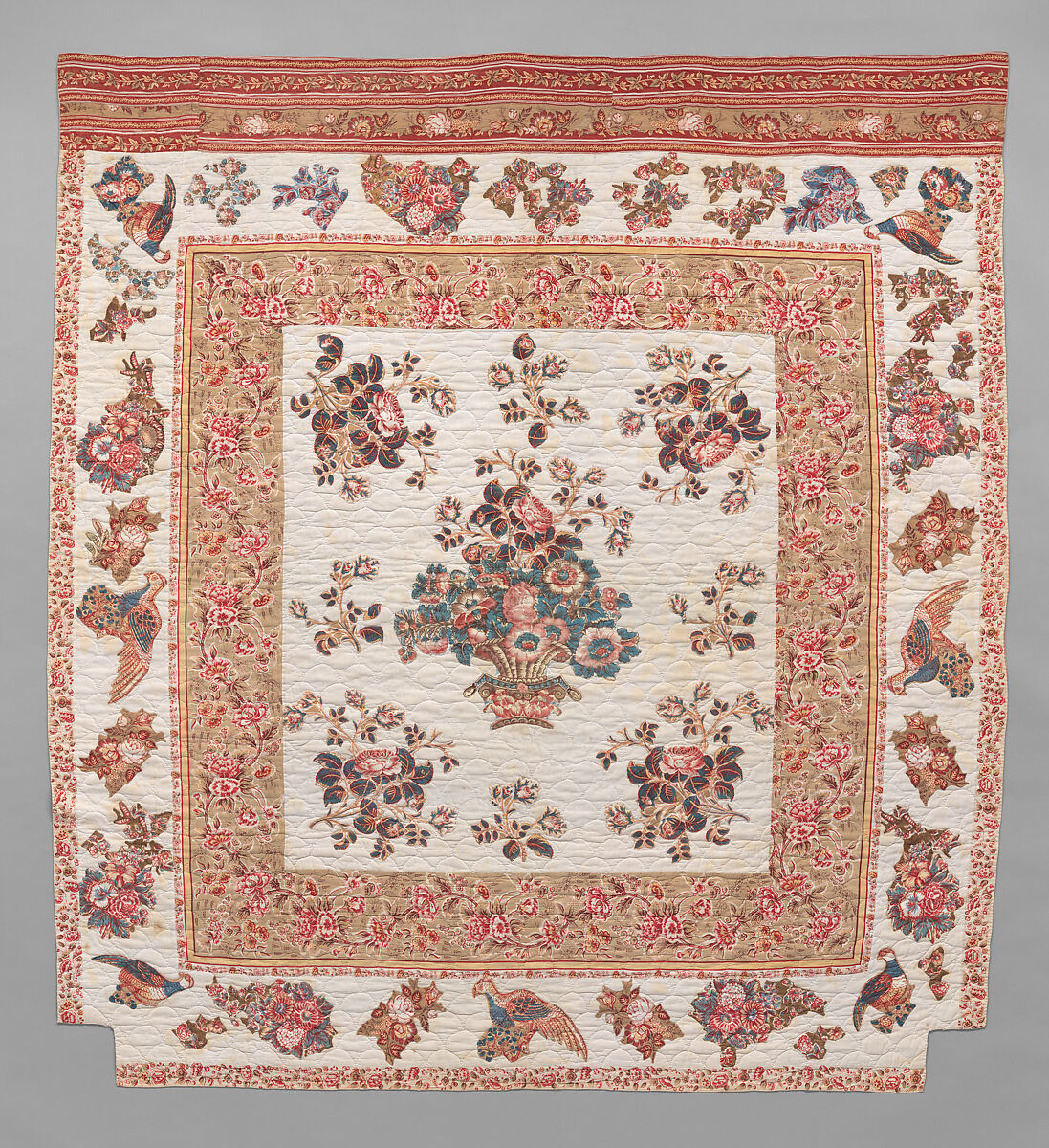
An early nineteenth-century quilt offers a textile example of making something new from material already at hand.

Cream cotton quilt with cut-out printed flowers and birds arranged around a central bouquet, bordered by red floral bands, with cutouts at the lower corners.

Figure 1 · c. 1820–1830

Chintz Appliqué Quilt

What looks at first like one printed fabric is assembled from motifs cut from older chintzes and stitched onto plain cotton. Look for repeated shapes used in different positions. Compare this approach with reusing tiles, timber or fittings: how could the available pieces guide a design, and what condition checks would come before using them again?

Maker unrecorded; probably English · The Metropolitan Museum of Art
Gift of Karen B. Cohen, in honor of Rochelle C. Rosenberg, 2022 · 2022.147.4

View full size ↗Download image
Collection record and reuse rights

Display copies are resized and compressed. Source and license links apply to the image above.

Explore more museum and archive collections →

Property & Renewal · Material Reuse

Ask what must be known

An attractive salvaged object does not by itself establish suitability for a new use. Organize the questions that would connect its history to a proposed role.

Try this

Choose a reuse example from a photograph. List unknowns about provenance, condition, dimensions and intended use without handling suspect material.

Reflect

What information would make you change the proposed use?

Take it further · optional follow-up

Propose a second use for the same object. Compare the information each use would require and leave suitability undecided where evidence is absent.

Compare with another activity · Conservation

The Specimen: Keep context with the object →
Connect this activity with other subjects

Follow a question through three activities, with a worked example and a worksheet for your observations.

Prepared study prompt · not an editor-reviewed research article

Explore the perspectives

The eight prepared perspectives below are open to everyone. Sign in for expanded readings, a private notebook and collections.

Sign in for a deeper reading and notebook →

Material

What is it made of, and why does that matter?

Reused materials vary in condition, dimensions and provenance. Their suitability depends on testing, cleaning and the requirements of the new use.

Technical

How does it actually work?

Salvage requires careful removal, sorting and documentation. Structural or safety-critical reuse needs appropriate professional assessment.

Economic

How has commerce shaped this?

Reuse can save purchase costs but add labor, storage and adaptation expenses. Value depends on availability, quality and the project schedule.

Consider a batch of reclaimed doors offered at a low purchase price. Measuring, transporting, storing, repairing and adapting them may account for much of the eventual cost. Compare complete routes to a usable result, including what happens if some pieces cannot be used, rather than comparing purchase prices alone.

Ethical

What responsibilities does this practice carry?

Claims about reclaimed materials should be truthful and traceable. Safe handling and labor conditions matter as much as aesthetic appeal.

Human

How do people actually experience this?

Craft knowledge helps recognize what can be repaired, adapted or incorporated into new work. Reuse often demands more judgment than buying standardized replacements.

A maker may adapt a design around the dimensions of available pieces instead of ordering material to fit a fixed drawing. This reverses part of the usual process: inventory comes before final detail. Record variations and agree which qualities need to match so later decisions are deliberate.

Historical

How did this evolve, and why has it endured?

Salvaged components carry traces of earlier buildings and manufacturing methods. Their history can enrich a project when accurately documented.

Ecological

How does it meet the living world?

Reuse may avoid new production and disposal, but transport, processing and contamination can affect the outcome. Compare relevant lifecycle stages.

Lessons & Failures

What has humanity learned the hard way?

Unknown treatment chemicals, hidden damage or poor fit can make reuse unsafe or impractical. Visual character is not evidence of technical suitability.