Skip to content
← Learning guide

Restoration

← Back to study results
Other download formats

Illustrated study

Reconstructing a pattern

A restoration drawing made from reassembled fragments raises questions about evidence and interpretation.

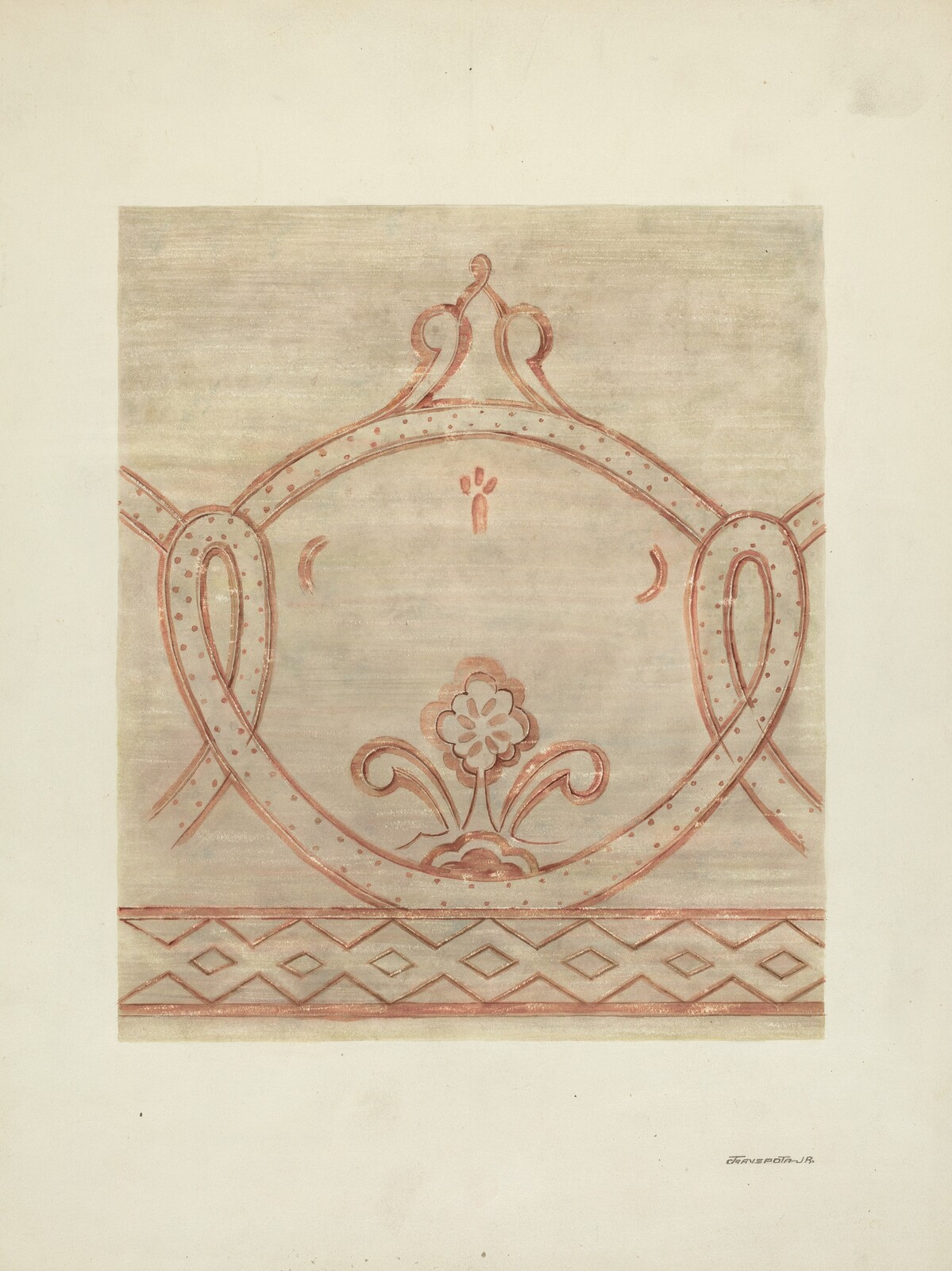
Watercolor and pencil restoration drawing of a red scrolling floral wall pattern on a muted ground, above a band of diamond shapes.

Figure 1 · c. 1940

Wall Painting, Restoration Drawing from Reassembled Fragments

Trace the repeated curves and the border below. The title tells us that fragments informed this drawing; the finished sheet alone does not show where every fragment ended or how gaps were interpreted. What additional photographs, notes or diagrams would help you distinguish surviving evidence from a reconstruction?

Gerald Transpota · National Gallery of Art, Washington
Index of American Design · 1943.8.6517

View full size ↗Download image
Collection record and reuse rights

Display copies are resized and compressed. Source and license links apply to the image above.

Explore more museum and archive collections →

Conservation · Restoration

Compare possible aims

Choose a public restoration account and identify what its authors say they intended to retain, reveal or change.

Try this

Separate the stated aim, documented intervention and your own response. Note whether alternatives are discussed.

Reflect

Which decision depends most on the chosen aim?

Take it further · optional follow-up

Write a second possible aim for the same documented project. Describe how that aim could change the questions asked, without proposing treatment of the object.

Compare with another activity · Property & Renewal

Repair: Define what success means →

Prepared study prompt · not an editor-reviewed research article