Skip to content
← Learning guide

Seasonal Change

← Back to study results
Other download formats

Illustrated study

A place at a particular moment

A flowering garden brings plant cycles, public space and seasonal attention into the same view.

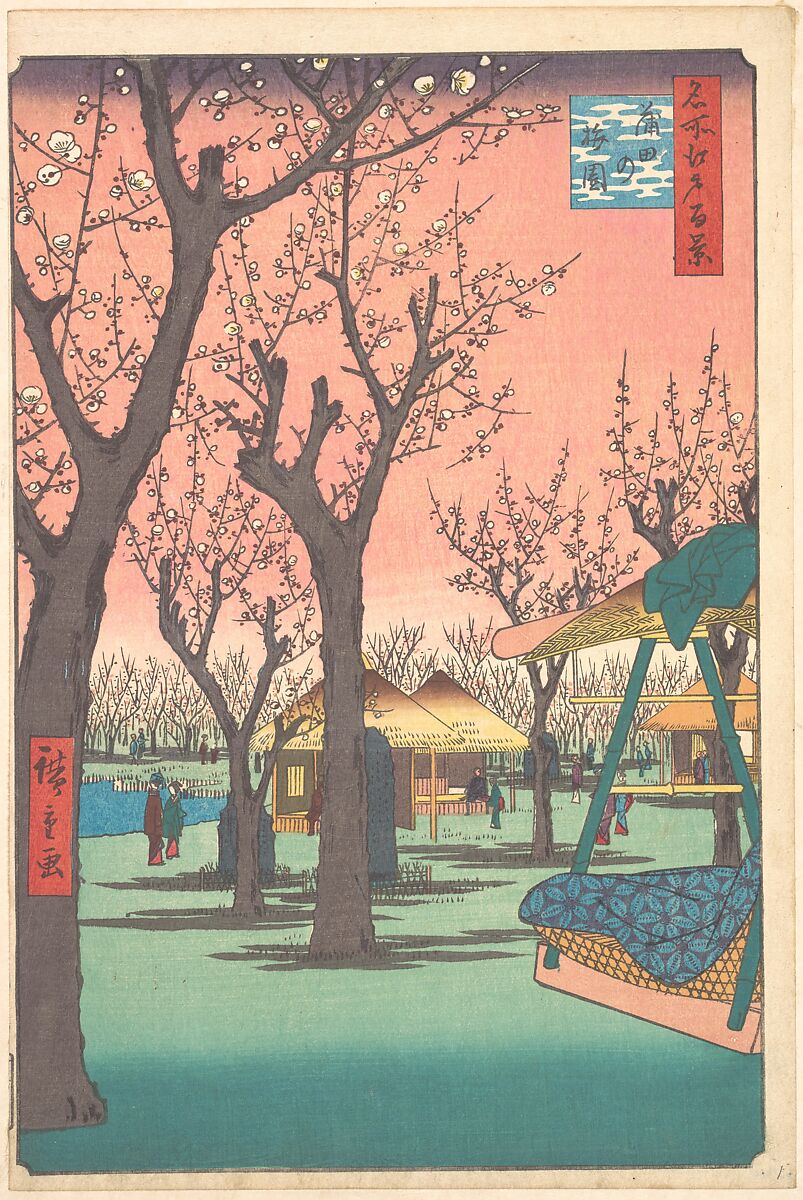
Japanese woodblock print of dark plum trunks and white blossoms against a pink sky, with visitors and thatched buildings in the garden and a cropped carrying chair at the right.

Figure 1 · 1857, second month

Plum Garden at Kamata

Start with the pale blossoms against the dark branches, then find the small figures among the trees. The image links a seasonal event with the experience of visiting a place. Choose somewhere you pass regularly: what changes first in its plants, light or activity, and what would you notice by returning a month later?

Utagawa Hiroshige · The Metropolitan Museum of Art
One Hundred Famous Views of Edo · The Howard Mansfield Collection, Purchase, Rogers Fund, 1936 · JP2510

View full size ↗Download image
Collection record and reuse rights

Display copies are resized and compressed. Source and license links apply to the image above.

Explore more museum and archive collections →

Landscape · Seasonal Change

Make a repeatable observation

Choose a small scene that you can revisit. Consistent notes make comparison possible without assuming that every change has the same cause.

Try this

Record the same viewpoint, date, weather and three visible features on each visit.

Reflect

Which changes appear seasonal, and which need another explanation?

Take it further · optional follow-up

Put two dated records side by side and circle only directly comparable features. Rewrite one earlier judgment as a question for your next visit.

Compare with another activity · Conservation

The Patina: Describe before valuing →
Connect this activity with other subjects

Follow a question through three activities, with a worked example and a worksheet for your observations.

  • Notice change over time →

    Compare observations without treating every difference as evidence of the same cause.

    This topic is activity 1 of 3.

Prepared study prompt · not an editor-reviewed research article