Skip to content
← Learning guide

The Hedge

← Back to study results
Other download formats

Illustrated study

A wall that grows

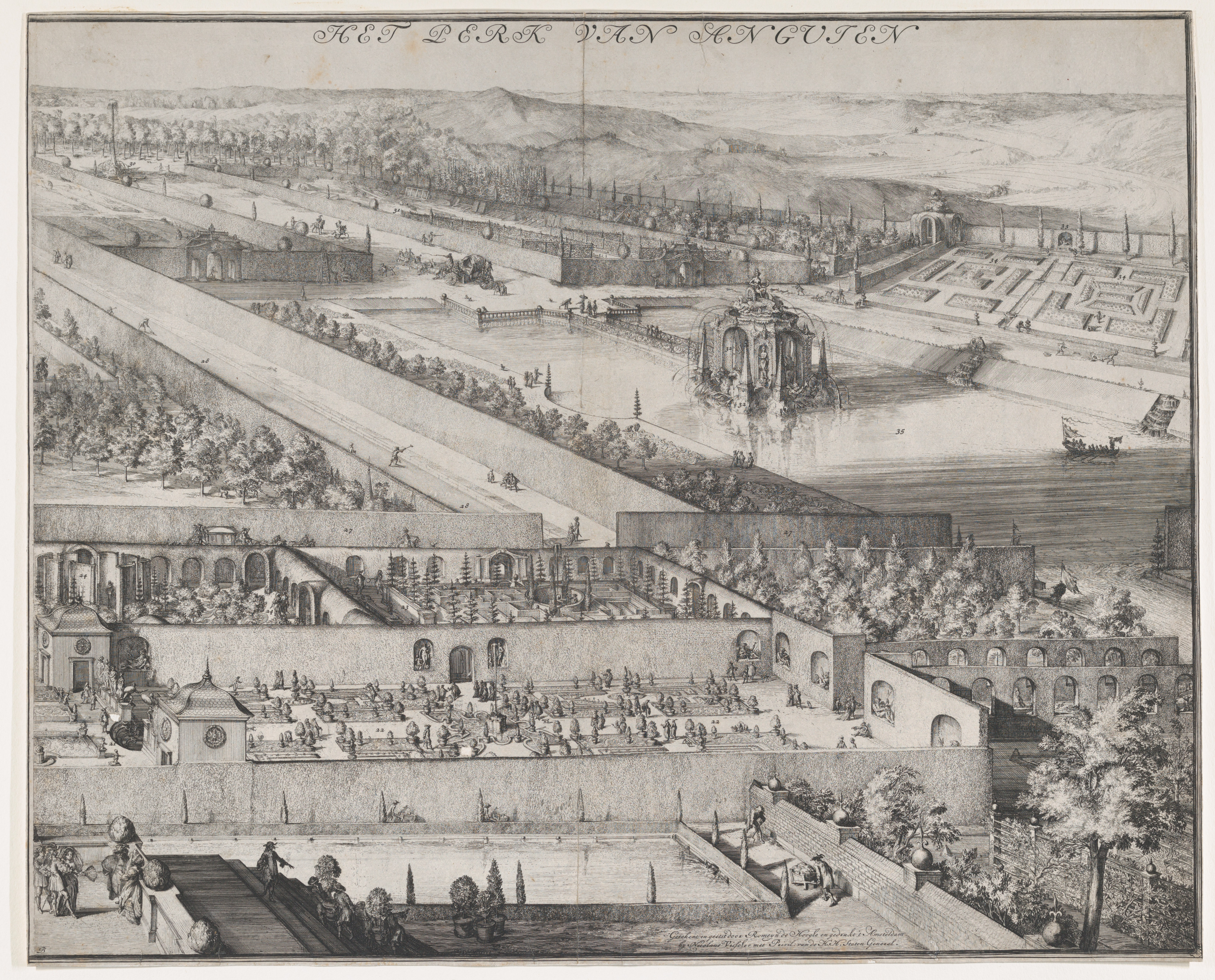
An etching from 1685 shows clipped planting used to separate and direct movement through a park.

Etching of a formal park with tall clipped hedges laid out in avenues and compartments, small figures walking between them and buildings in the distance.

Figure 1 · 1685

Detail of the Park at Enghien (right half)

Trace the lines of planting and note where each one stops a view or opens one. A hedge can be a boundary, a screen and a route at once, and it holds those roles only while someone keeps cutting it. The print shows an intention rather than the seasonal work behind it. What becomes of a plan like this when the cutting stops?

Romeyn de Hooghe · The Metropolitan Museum of Art
The Elisha Whittelsey Collection, The Elisha Whittelsey Fund, 1949

View full size ↗Download image
Collection record and reuse rights

Display copies are resized and compressed. Source and license links apply to the image above.

Explore more museum and archive collections →

Landscape · The Hedge

Describe an edge

Study what a planted edge lets you see, hear and pass through. Consider both sides before deciding whose experience it improves.

Try this

Draw the hedge in relation to a path or entrance. Record openings and sightlines from places you are allowed to stand.

Reflect

Who might experience this boundary differently, and how could you learn from them?

Take it further · optional follow-up

Redraw the boundary with one opening moved. Describe whose view or route changes and which effects remain uncertain.

Compare with another activity · Hospitality

The Threshold: Study arrival as a transition →

Prepared study prompt · not an editor-reviewed research article