Skip to content
Landscape

A topic from several perspectives

Apply this topic to your work →

The Shade Tree

Explore the shade tree through the perspectives below. Compare their examples and tradeoffs, then connect what you learn to your own work.

Illustrated study

A tree, seen in its details

A botanical plate turns a familiar canopy into leaves, flowers and fruit worth noticing.

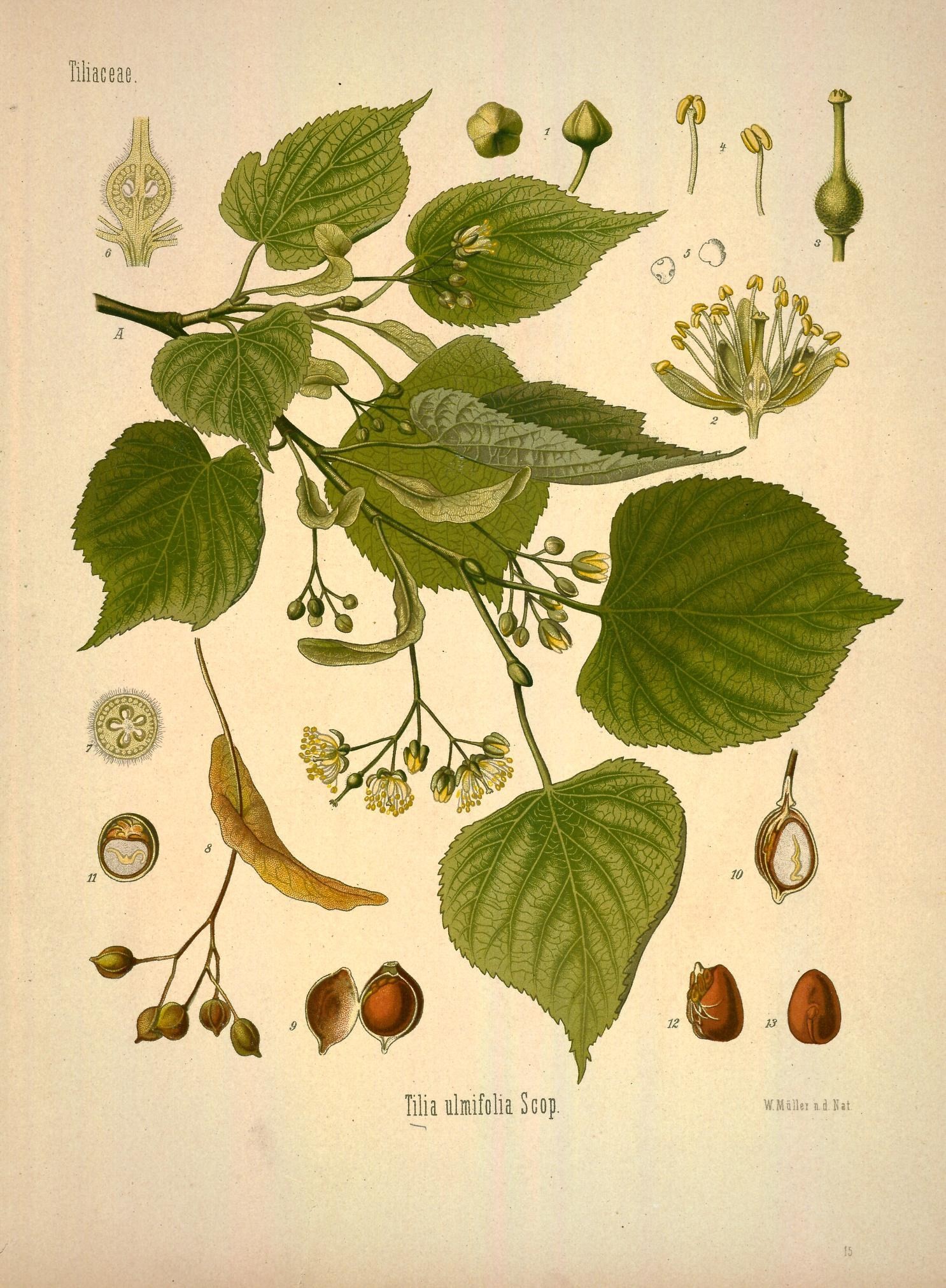
Botanical plate of a linden branch with heart-shaped serrated leaves, hanging flowers, pale elongated bracts and numbered details of flowers, fruit and seeds.

Figure 1 · 1887

Small-leaved linden — Tilia cordata

Follow the veins across a leaf, then find the pale bract beside the hanging flower cluster. The enlarged details show structures too small to read in the whole branch. Next time you stand beneath a tree, look from its canopy down to one leaf: what can you recognize, and what would you need to observe through another season?

W. Müller (signed on plate); Köhler’s Medizinal-Pflanzen · Biodiversity Heritage Library · Missouri Botanical Garden
Plate 15 · BHL page 303592 · BioDivLibrary scan via Wikimedia Commons; reproduced unchanged

View full size ↗Download image
Collection record and reuse rights

Display copies are resized and compressed. Source and license links apply to the image above.

Explore more museum and archive collections →

Landscape · The Shade Tree

Observe shade through time

Treat a tree and its shade as a changing scene. A single photograph records one moment, not the experience of a whole day or season.

Try this

Sketch the shaded area at two times and note where people can sit or walk. Observe without inspecting unstable limbs.

Reflect

How would your judgment change in another season or for another user?

Take it further · optional follow-up

Compare your two shade sketches against a fictional person's daily schedule. Identify a time when the place would need a different option for comfort.

Compare with another activity · Built Environment

The Courtyard: Read the space between rooms →

Prepared study prompt · not an editor-reviewed research article

Explore the perspectives

The eight prepared perspectives below are open to everyone. Sign in for expanded readings, a private notebook and collections.

Sign in for a deeper reading and notebook →

Ecological

How does it meet the living world?

Trees moderate microclimate through shade and evapotranspiration while providing habitat. Benefits vary with species, canopy, water availability and surrounding surfaces.

Material

What is it made of, and why does that matter?

Wood, bark, leaves and roots respond differently to mechanical stress, moisture and decay. The tree is a living structure, not a static architectural object.

Historical

How did this evolve, and why has it endured?

Urban and garden trees reflect changing planting fashions, land use and public-health priorities. Mature specimens may predate the spaces now built around them.

Cultural

How have different societies approached this?

Shade trees can become landmarks and gathering places. Their significance may extend beyond measurable cooling to memory, identity and customary use.

An established tree may be known as the place where people meet after school or pause on a walk. That use may be absent from a planting inventory. Ask regular users what the place means to them and record those accounts alongside the physical assessment.

Human

How do people actually experience this?

A tree changes the experience of waiting, walking and sitting outdoors. Accessibility, fallen fruit, roots and maintenance also affect how people share its space.

A bench can sit beside a tree yet receive little shade when people most often use it. Compare the position of the canopy's shadow at different times with the location of seats and walking routes. The relevant benefit is shade where and when it helps, not simply the presence of a tree.

Technical

How does it actually work?

Species selection, root space, utilities, pruning and structural assessment require informed planning. Canopy size in a nursery photograph does not predict growth on every site.

Ethical

What responsibilities does this practice carry?

Tree decisions can distribute shade and maintenance burdens unequally. Consultation and long-term care matter where planting affects shared streets and property.

Lessons & Failures

What has humanity learned the hard way?

Insufficient root volume, soil compaction, drought and improper pruning can shorten a tree's life. A large canopy is not proof of structural safety.