Skip to content
← Learning guide

The Field Note

← Back to study results
Other download formats

Activity 2 of 3

Describe before you explain

Practice separating what you can see from what you think it means.

Illustrated study

A sketch that keeps an observation

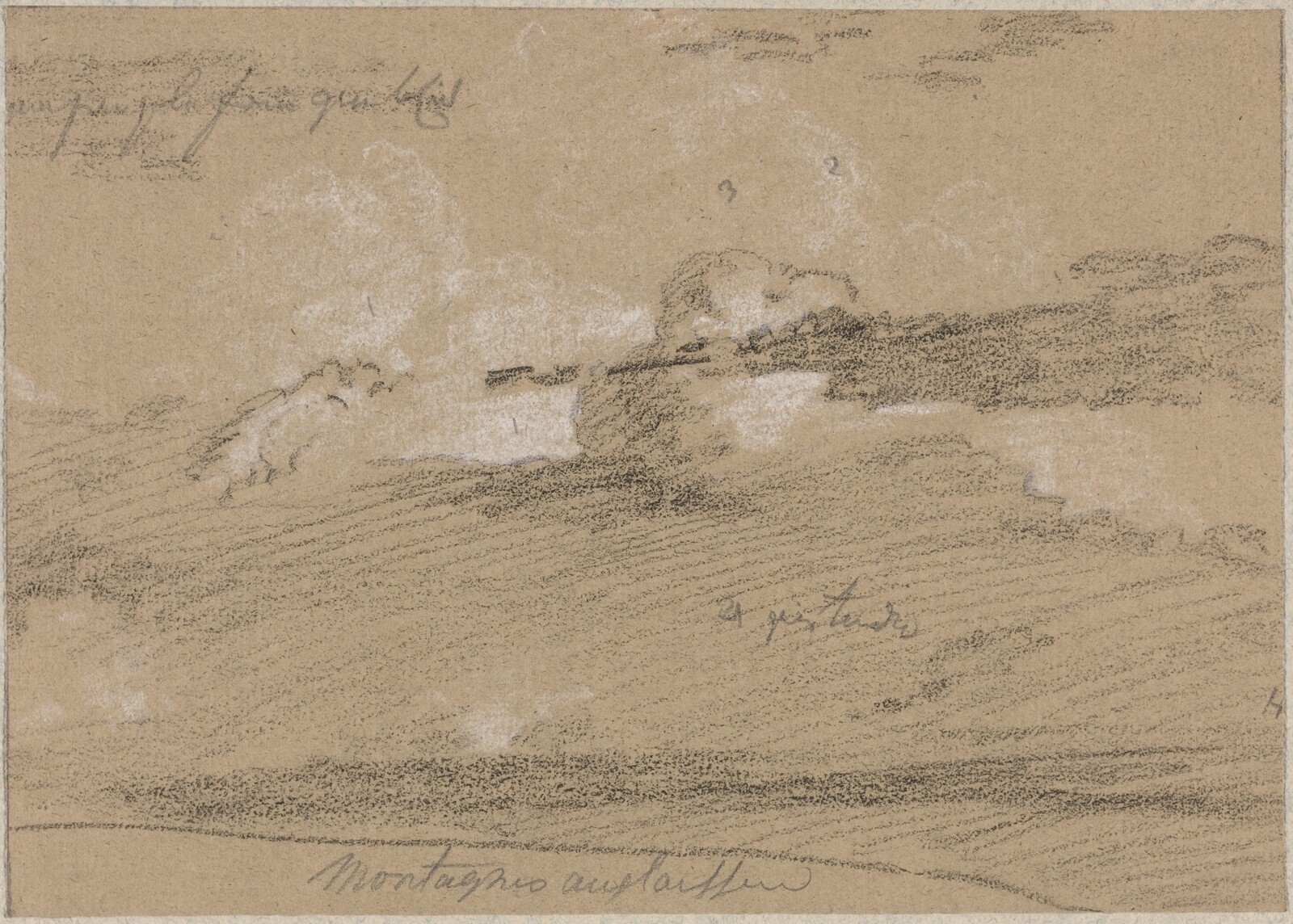
An annotated chalk study brings drawing and written reminders together on one small sheet.

Black and white chalk cloud study on brown paper, with a low mountain outline, numbers and handwritten annotations.

Figure 1 · 1820s/1830s

Study of Clouds above the Mountains

Notice the white chalk, darker strokes and handwritten marks. Together they preserve more than an outline, yet some annotations remain difficult to read. Use the sheet as a comparison for a field note: what date, place, conditions and labels would make your own observation useful to someone who was not there?

Jean Antoine Linck · National Gallery of Art, Washington
Gift of Andrew and Pauline Robison · 2007.140.2

View full size ↗Download image
Collection record and reuse rights

Display copies are resized and compressed. Source and license links apply to the image above.

Explore more museum and archive collections →

Conservation · The Field Note

Write for a later comparison

Choose a harmless everyday observation. Make the time, place and viewpoint clear while separating description from interpretation.

Try this

Write a short note, revisit the scene and ask whether the same features can be compared.

Reflect

What did your first note omit because it seemed obvious at the time?

Take it further · optional follow-up

Give your note to a reader and ask what they could reliably compare on a later visit. Add the missing viewpoint or conditions to a revised version.

Compare with another activity · Landscape

Seasonal Change: Make a repeatable observation →

This opens a separate activity. Use Back to return to your sequence.

Prepared study prompt · not an editor-reviewed research article