Skip to content
Landscape

A topic from several perspectives

Apply this topic to your work →

The Rain Garden

Explore the rain garden through the perspectives below. Compare their examples and tradeoffs, then connect what you learn to your own work.

Illustrated study

A place for rain to pause

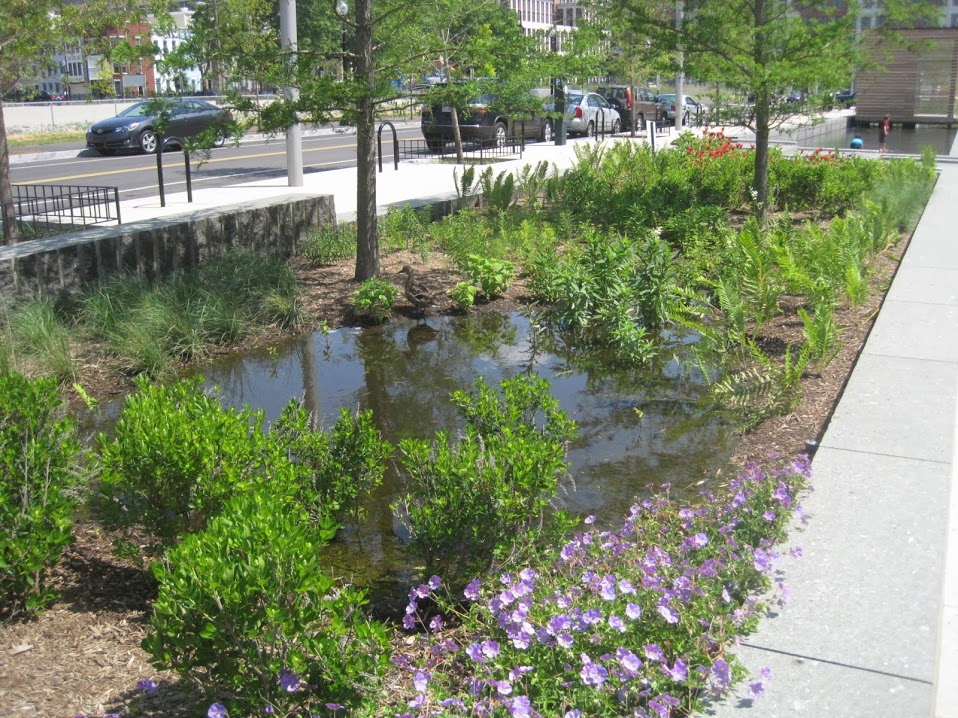
An EPA photograph offers a starting point for studying a planted rain garden and its surrounding surfaces.

A street-side rain garden with shallow standing water among grasses, trees and purple flowers, bordered by a sidewalk.

Figure 1 · Published 27 October 2014

Rain Garden

Look at the boundary between planting and hard surfaces. Where might runoff enter, and what evidence would establish its route? The photograph records an arrangement, not its drainage performance. Compare it with a site plan and observations after rain before drawing conclusions.

Alisha Goldstein, U.S. Environmental Protection Agency · U.S. Environmental Protection Agency
EPA Smart Growth photograph · via Wikimedia Commons

View full size ↗Download image
Collection record and reuse rights

Display copies are resized and compressed. Source and license links apply to the image above.

Explore more museum and archive collections →

Landscape · The Rain Garden

Follow a water question

Begin with the question of where rainwater appears to arrive and leave. A sketch can expose what you have observed and what you have only assumed.

Try this

From a safe public position, mark visible surfaces, planted areas and water after rain. Do not enter drainage structures.

Reflect

What would you need to establish before calling this place suitable for a rain garden?

Take it further · optional follow-up

Add arrows only where you observed water movement. Use dotted lines for routes you suspect, then write the question each dotted line leaves open.

Compare with another activity · Property & Renewal

The Building Survey: Write the questions before the conclusions →

Prepared study prompt · not an editor-reviewed research article

Explore the perspectives

The eight prepared perspectives below are open to everyone. Sign in for expanded readings, a private notebook and collections.

Sign in for a deeper reading and notebook →

Ecological

How does it meet the living world?

A rain garden can slow and infiltrate some stormwater while supporting selected plants and soil organisms. Performance depends on rainfall, drainage area, soil and maintenance.

Material

What is it made of, and why does that matter?

Soil mix, mulch, stone and vegetation affect infiltration and erosion. Plant choices must suit expected wet and dry periods, rather than simply looking attractive.

Historical

How did this evolve, and why has it endured?

Rain gardens emerged within broader approaches to managing urban stormwater closer to where it falls. Their design has evolved with research into infiltration and runoff quality.

Cultural

How have different societies approached this?

Visible water-management landscapes can change expectations about what a planted public or private space should look like. Community acceptance depends on upkeep and communication.

Human

How do people actually experience this?

A rain garden may add seasonal interest and reduce nuisance runoff, but standing water or poor siting can frustrate users. Its purpose should be legible to people maintaining the space.

Imagine a shallow planted area beside a parking lot. During dry weather it may look like an ordinary bed; during rain its inlet and overflow become important. A simple maintenance record should identify where water enters, what to inspect and who is responsible for keeping those points clear.

Technical

How does it actually work?

Sizing, overflow routes, infiltration rates and setbacks require site-specific evaluation. A planted depression is not automatically a functioning rain garden.

Ethical

What responsibilities does this practice carry?

Runoff should not be redirected in ways that damage neighboring property or create hazards. Local drainage requirements and underground utilities must be considered.

Lessons & Failures

What has humanity learned the hard way?

Clogging, erosion, inappropriate soils and inadequate overflow can cause failure. Inspection after heavy rain is often more informative than appearance during dry weather.

Suppose water bypasses the planting and runs along the pavement. The plants may be healthy while the intended drainage function is not being achieved. Record where the water goes during a safe observation, then compare that route with the design. Changing the planting alone may not address the problem.