Skip to content
← Learning guide

The Rain Garden

← Back to study results
Other download formats

Illustrated study

A place for rain to pause

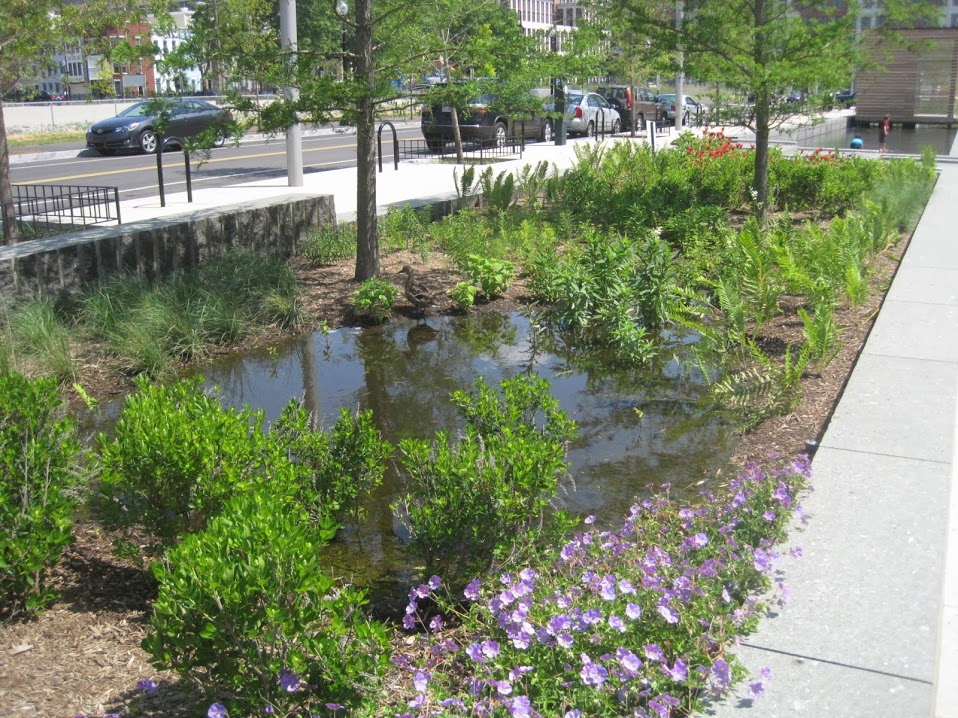
An EPA photograph offers a starting point for studying a planted rain garden and its surrounding surfaces.

A street-side rain garden with shallow standing water among grasses, trees and purple flowers, bordered by a sidewalk.

Figure 1 · Published 27 October 2014

Rain Garden

Look at the boundary between planting and hard surfaces. Where might runoff enter, and what evidence would establish its route? The photograph records an arrangement, not its drainage performance. Compare it with a site plan and observations after rain before drawing conclusions.

Alisha Goldstein, U.S. Environmental Protection Agency · U.S. Environmental Protection Agency
EPA Smart Growth photograph · via Wikimedia Commons

View full size ↗Download image
Collection record and reuse rights

Display copies are resized and compressed. Source and license links apply to the image above.

Explore more museum and archive collections →

Landscape · The Rain Garden

Follow a water question

Begin with the question of where rainwater appears to arrive and leave. A sketch can expose what you have observed and what you have only assumed.

Try this

From a safe public position, mark visible surfaces, planted areas and water after rain. Do not enter drainage structures.

Reflect

What would you need to establish before calling this place suitable for a rain garden?

Take it further · optional follow-up

Add arrows only where you observed water movement. Use dotted lines for routes you suspect, then write the question each dotted line leaves open.

Compare with another activity · Property & Renewal

The Building Survey: Write the questions before the conclusions →

Prepared study prompt · not an editor-reviewed research article