Skip to content
Education

A topic from several perspectives

Apply this topic to your work →

The Textbook

Explore the textbook through the perspectives below. Compare their examples and tradeoffs, then connect what you learn to your own work.

Illustrated study

Learning through pictures and familiar sounds

An illustrated alphabet brings things a learner can recognize into the work of reading.

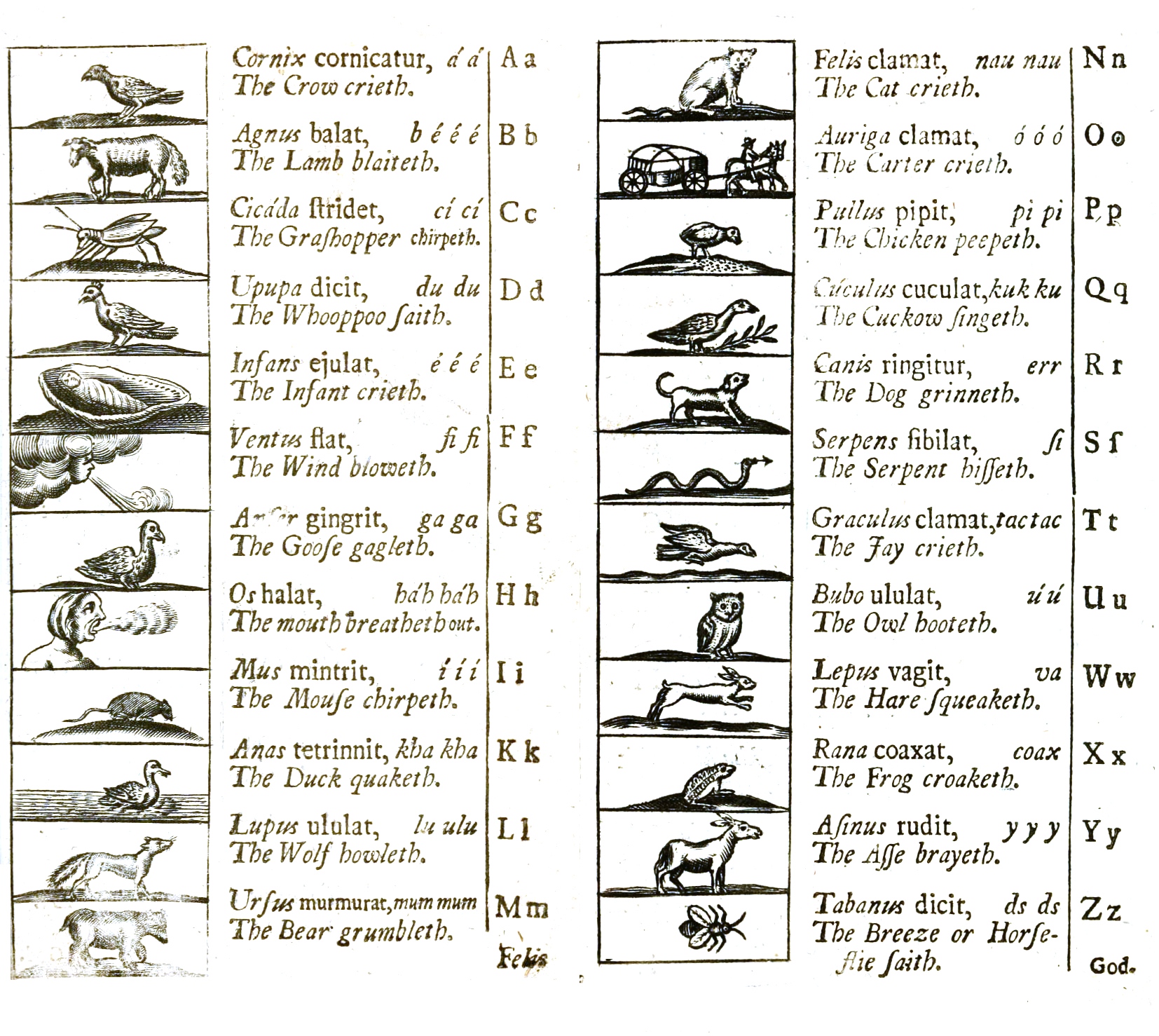
Two columns of small illustrations of animals, people and wind, alongside Latin and English descriptions, written sounds and pairs of capital and lowercase letters.

Figure 1 · 1705 edition

Illustrated alphabet from Orbis sensualium pictus

Read across one row: picture, words, sound, letter. The page asks the learner to connect a printed symbol with something heard or seen. Its spelling and sound associations belong to its time. What familiar sight or sound would you use to introduce an unfamiliar idea to someone today?

Johann Amos Comenius (author); illustrator unidentified · Internet Archive · reproduction via Wikimedia Commons
Orbis sensualium pictus · Alphabet chart

View full size ↗Download image
Collection record and reuse rights

Display copies are resized and compressed. Source and license links apply to the image above.

Explore more museum and archive collections →

Education · The Textbook

Read the structure of a lesson

Choose a chapter and study how examples, definitions and exercises are arranged. Consider the knowledge it appears to assume.

Try this

Map the sequence and identify where a new term first appears. Try one exercise using only the preceding material.

Reflect

Which prerequisite is present only by implication?

Take it further · optional follow-up

Rewrite one transition between an example and an exercise. State which idea the learner must carry forward and where the chapter supports it.

Compare with another activity · Graphic Design

The Grid: Make the underlying arrangement visible →

Prepared study prompt · not an editor-reviewed research article

Explore the perspectives

The eight prepared perspectives below are open to everyone. Sign in for expanded readings, a private notebook and collections.

Sign in for a deeper reading and notebook →

Historical

How did this evolve, and why has it endured?

Textbooks organize knowledge for particular courses and audiences. Comparing editions can reveal changes in evidence, terminology and educational priorities. A publication date identifies an edition, not the age or reliability of every idea inside it.

Human

How do people actually experience this?

A textbook offers a route through unfamiliar material, but readers may enter with different backgrounds. Definitions, examples and navigation help them locate a useful starting point. Observe where a reader must leave the page to understand it.

Imagine a reader opening a chapter halfway through a course. The first paragraph uses three unfamiliar terms. Mark where each term is explained and whether the reader can return easily to the original passage. A glossary helps only if the definition gives the reader enough information to continue.

Cultural

How have different societies approached this?

Selection and sequence communicate what a field considers central. Examine which languages, regions and practitioners appear as authorities. Omissions can shape a learner's view as strongly as the material included.

Ethical

What responsibilities does this practice carry?

Authors and teachers have responsibilities for accuracy, attribution and fair representation. Distinguish settled explanations from disputed interpretations. Learners should be able to identify the sources and limits of consequential claims.

Debates

Where do thoughtful practitioners disagree?

A shared textbook can provide coherence, while a collection of sources can reveal disagreement and variety. Each approach needs editorial judgment. Compare how easily learners can connect ideas without mistaking one account for the whole field.

Material

What is it made of, and why does that matter?

Binding, page layout, diagrams and digital navigation influence use. An interactive feature may aid exploration but fail when a connection is unavailable. Test the formats learners will actually use, including printouts and assistive reading tools.

Take one page containing a diagram, a caption and a paragraph that refers to it. Trace the order in which you need to read them. Then imagine the page printed in black and white or read aloud: which relationships depend entirely on color or position, and what wording could make them explicit?

Economic

How has commerce shaped this?

Purchase price is only part of access: replacement editions, device requirements and licensing can add costs. Open materials also require editorial and maintenance work. Compare the total burden on learners and the institution.

Future

Where might this be heading?

Digital publishing permits revision, but changing text can complicate citation and shared discussion. Future textbooks need clear versions and dependable access. New examples are useful when they strengthen an explanation rather than merely signal recency.