Skip to content
← Learning guide

Material Reuse

← Back to study results
Other download formats

Activity 2 of 3

Keep context with an object

Ask what an object’s setting and history contribute to its meaning and possible use.

Illustrated study

A new design from existing pieces

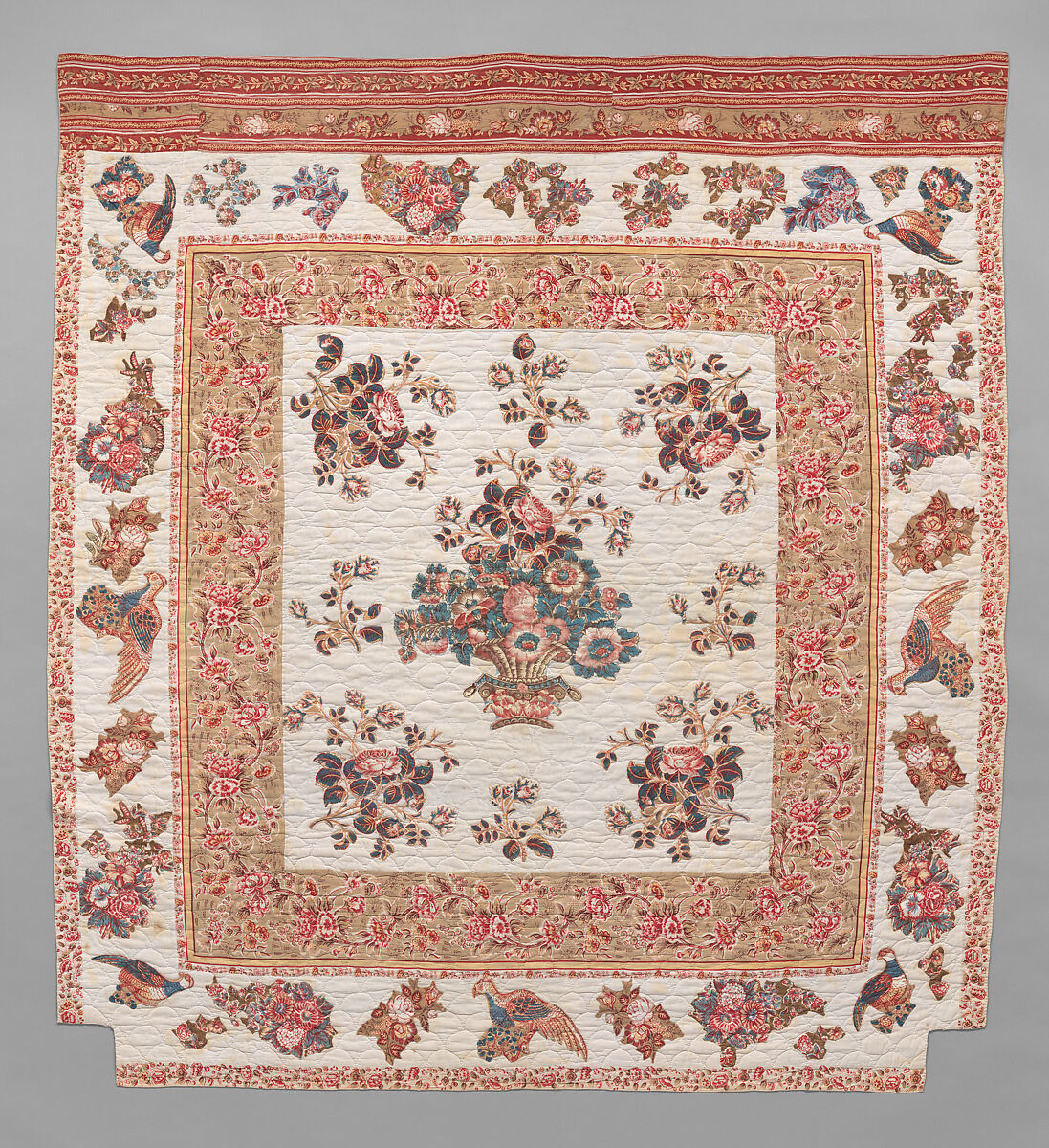
An early nineteenth-century quilt offers a textile example of making something new from material already at hand.

Cream cotton quilt with cut-out printed flowers and birds arranged around a central bouquet, bordered by red floral bands, with cutouts at the lower corners.

Figure 1 · c. 1820–1830

Chintz Appliqué Quilt

What looks at first like one printed fabric is assembled from motifs cut from older chintzes and stitched onto plain cotton. Look for repeated shapes used in different positions. Compare this approach with reusing tiles, timber or fittings: how could the available pieces guide a design, and what condition checks would come before using them again?

Maker unrecorded; probably English · The Metropolitan Museum of Art
Gift of Karen B. Cohen, in honor of Rochelle C. Rosenberg, 2022 · 2022.147.4

View full size ↗Download image
Collection record and reuse rights

Display copies are resized and compressed. Source and license links apply to the image above.

Explore more museum and archive collections →

Property & Renewal · Material Reuse

Ask what must be known

An attractive salvaged object does not by itself establish suitability for a new use. Organize the questions that would connect its history to a proposed role.

Try this

Choose a reuse example from a photograph. List unknowns about provenance, condition, dimensions and intended use without handling suspect material.

Reflect

What information would make you change the proposed use?

Take it further · optional follow-up

Propose a second use for the same object. Compare the information each use would require and leave suitability undecided where evidence is absent.

Compare with another activity · Conservation

The Specimen: Keep context with the object →

This opens a separate activity. Use Back to return to your sequence.

Prepared study prompt · not an editor-reviewed research article