Skip to content
← Learning guide

Recess

← Back to study results
Other download formats

Illustrated study

Where a break happens

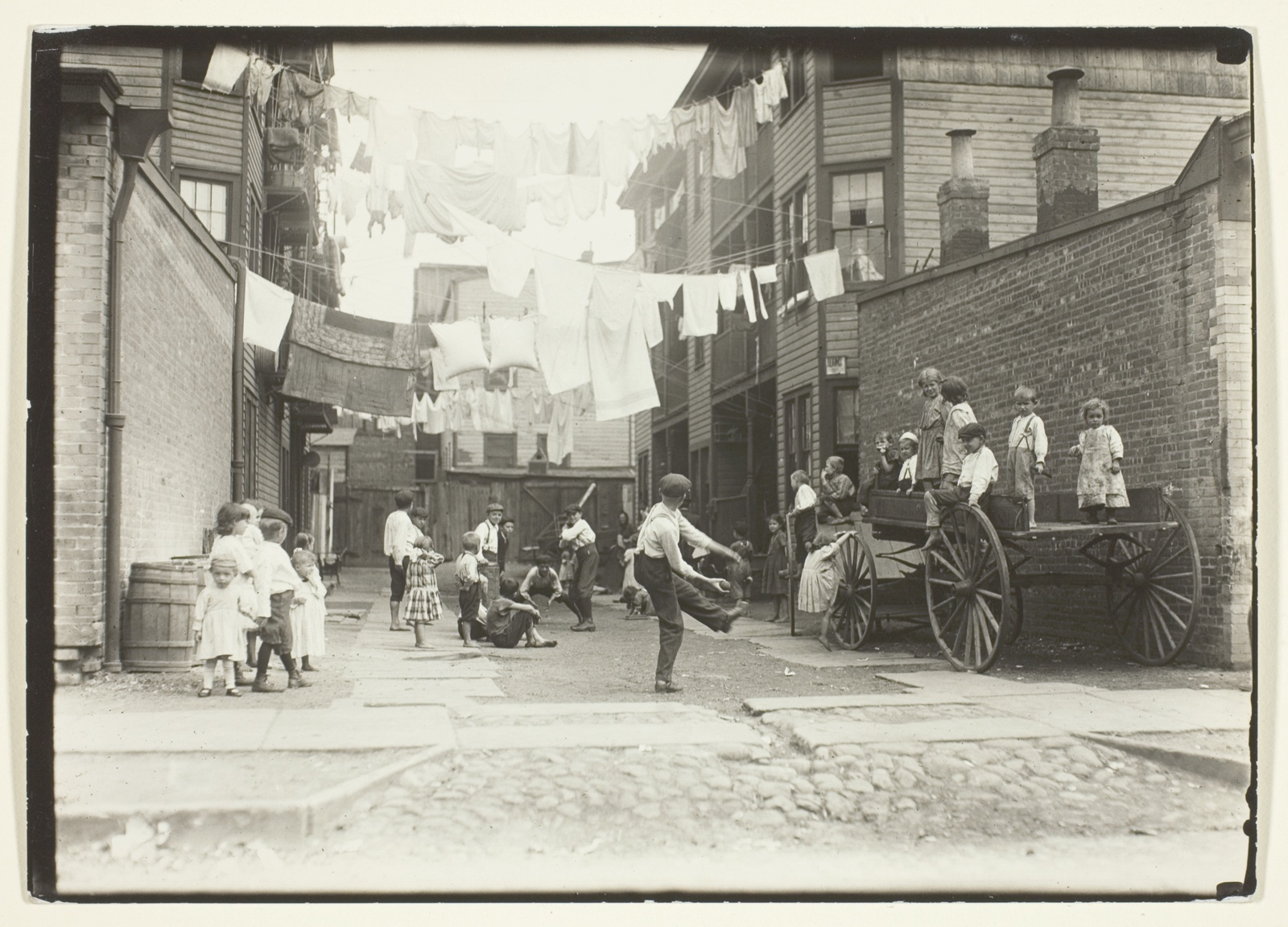
A photograph from 1909 records children at play in an alley and the surroundings that shape it.

Black-and-white photograph of children playing on a cobbled alley between brick tenement walls, with a group in the foreground and washing hung above.

Figure 1 · 1909

Playground in a Mill Village (Playground in a Tenement Alley), Boston

Note the ground, the walls and the space left for movement. Hine photographed working neighborhoods to document conditions, so this image is evidence with an argument attached, and he recorded no names, which keeps the children unidentifiable today. The frame also omits what happened before and after the moment. What does a break look like when the only place to take it is also a service alley?

Lewis Wickes Hine · The Art Institute of Chicago
Acquired through exchange with George Eastman House

View full size ↗Download image
Collection record and reuse rights

Display copies are resized and compressed. Source and license links apply to the image above.

Explore more museum and archive collections →

Education · Recess

Ask whose experience is visible

Consider a shared break space through observation or a fictional plan. Do not record identifying information about children.

Try this

List the kinds of activity the space appears to invite and questions about participation, choice and supervision.

Reflect

Who would need to be consulted before judging how well the space works?

Take it further · optional follow-up

Draw two possible arrangements for the fictional space. Compare the choices each offers and list whose perspective you would need before favoring one.

Compare with another activity · Hospitality

The Table: Map participation →
Connect this activity with other subjects

Follow a question through three activities, with a worked example and a worksheet for your observations.

Prepared study prompt · not an editor-reviewed research article