Skip to content
← Learning guide

The Interface

← Back to study results
Other download formats

Activity 3 of 3

Make information easier to use

Examine how arrangement, wording and feedback guide a person's next action.

Closing reflection: What small change would make the next action more understandable?

Illustrated study

Computing through switches and cables

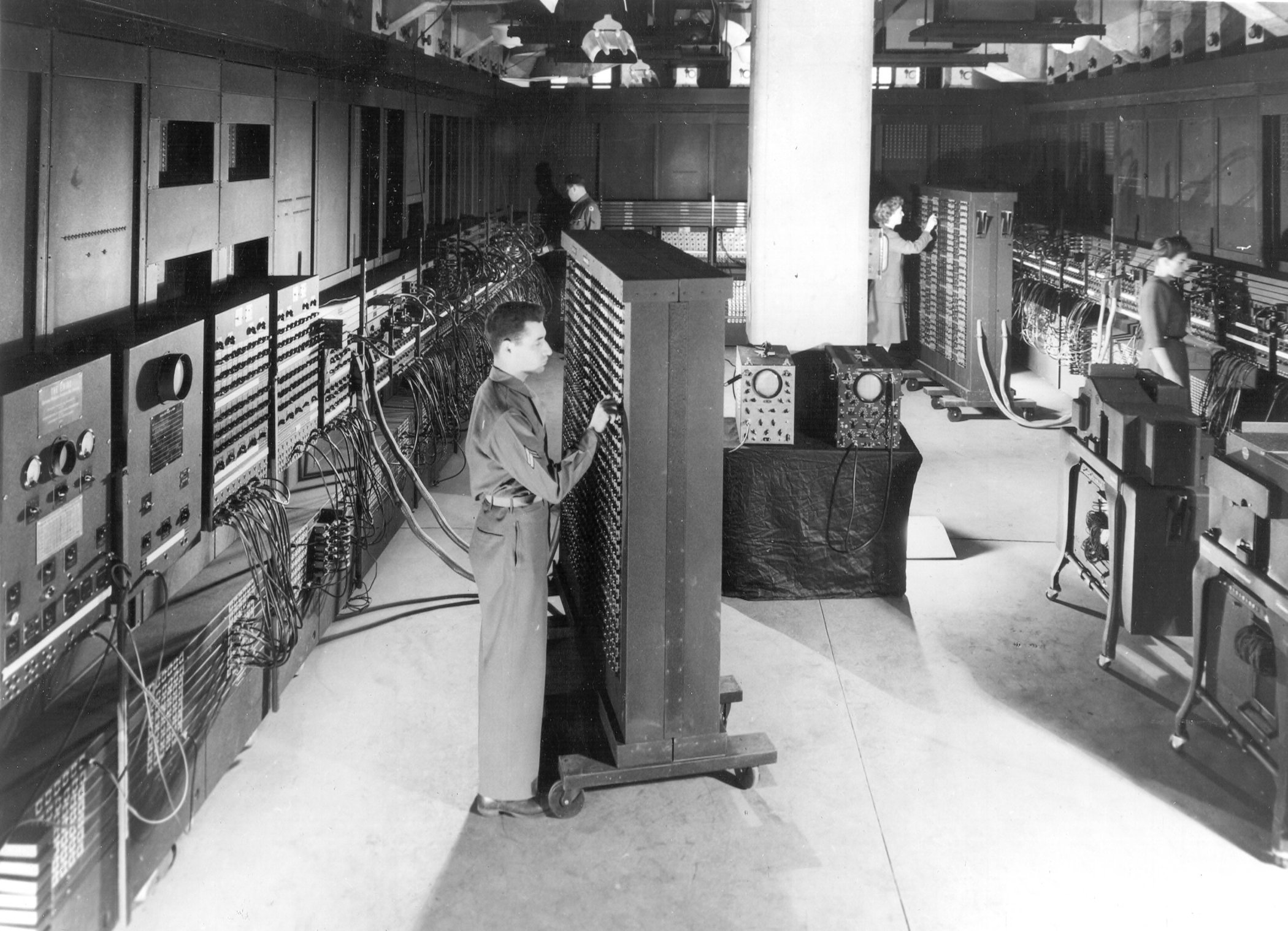
A U.S. Army photograph of ENIAC shows an interface that occupies a room rather than a screen.

Operators among ENIAC cabinets, cables and switch panels, with one operator adjusting a tall panel in the foreground.

Figure 1 · 1946

ENIAC at the Moore School

Notice the hands, labels, cables and distances between controls. Which actions appear available, and what knowledge would be needed before using them? Compare this physical arrangement with a familiar screen: where are instructions, system state and feedback made visible? A photograph alone cannot establish the complete operating sequence.

Unidentified U.S. Army photographer · U.S. Army · reproduction via Wikimedia Commons
U.S. Army photograph · courtesy Harold Breaux

View full size ↗Download image
Collection record and reuse rights

Display copies are resized and compressed. Source and license links apply to the image above.

Explore more museum and archive collections →

Software · The Interface

Observe feedback

Study a low-risk interaction such as filtering a list. Notice how intention, action and feedback fit together.

Try this

Record the initial state, your action and the visible result. Compare a successful search with an empty result.

Reflect

How can a person tell whether the system finished, failed or is still working?

Take it further · optional follow-up

Draft the message for an empty result and one recoverable error. Include a next action, then check whether the wording preserves what the user already entered.

Compare with another activity · Hospitality

The Welcome: Write the next useful sentence →

This opens a separate activity. Use Back to return to your sequence.

Prepared study prompt · not an editor-reviewed research article