Skip to content
← Learning guide

The Assembly Line

← Back to study results
Other download formats

Illustrated study

A sequence of work, made visible

A factory photograph reveals the relationship between repeated parts, individual tasks and a shared production line.

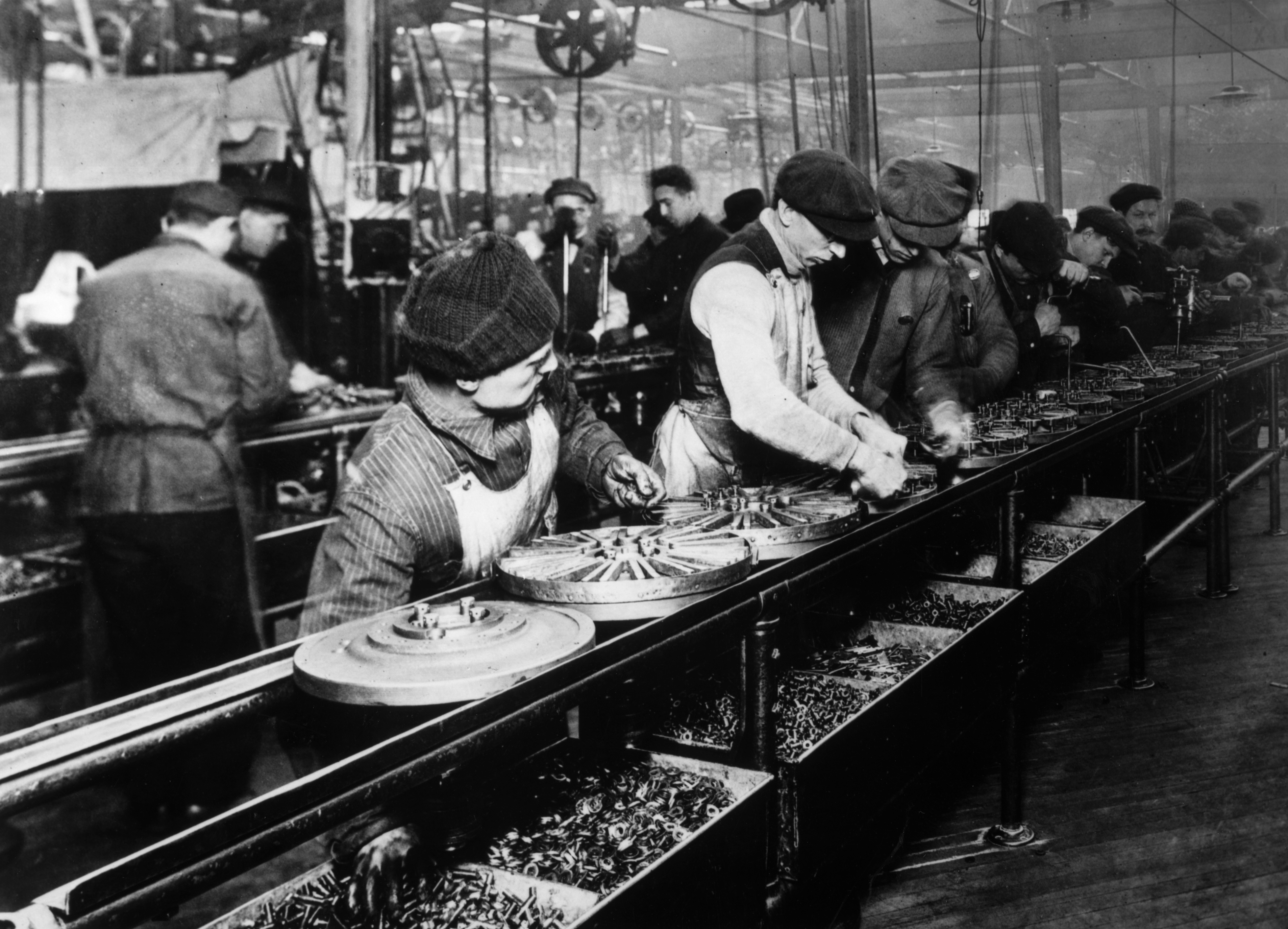
Black-and-white photograph of workers standing along a diagonal assembly line, handling circular metal components, with bins of small parts below and belts overhead.

Figure 1 · 1913

Magneto and flywheel assembly at Ford’s Highland Park plant

Follow the line of circular parts, then look at the workers’ hands and the bins within reach. Each station is part of a larger sequence. The photograph shows an arrangement of work, but cannot tell us its pace or how workers experienced it. What would you ask the people doing these tasks about skill, coordination and fatigue?

Photographer unidentified · U.S. National Archives · reproduction via Wikimedia Commons
National Archives identifier 1633486 · Highland Park, Michigan

View full size ↗Download image
Collection record and reuse rights

Display copies are resized and compressed. Source and license links apply to the image above.

Explore more museum and archive collections →

Manufacturing · The Assembly Line

Trace a handoff

Use an invented assembly sequence to study how one step prepares work for another. Avoid drawing conclusions about a real workplace without evidence.

Try this

Map five steps, their inputs and the information passed between them. Add a fictional interruption.

Reflect

Where would a small uncertainty become repeated work?

Take it further · optional follow-up

At the fictional interruption, list what the next step needs to know before work resumes. Add that information to the handoff without designing real equipment.

Compare with another activity · Property & Renewal

The Handover: Design a useful record →

Prepared study prompt · not an editor-reviewed research article