Skip to content
← Learning guide

The Textbook

← Back to study results
Other download formats

Illustrated study

Learning through pictures and familiar sounds

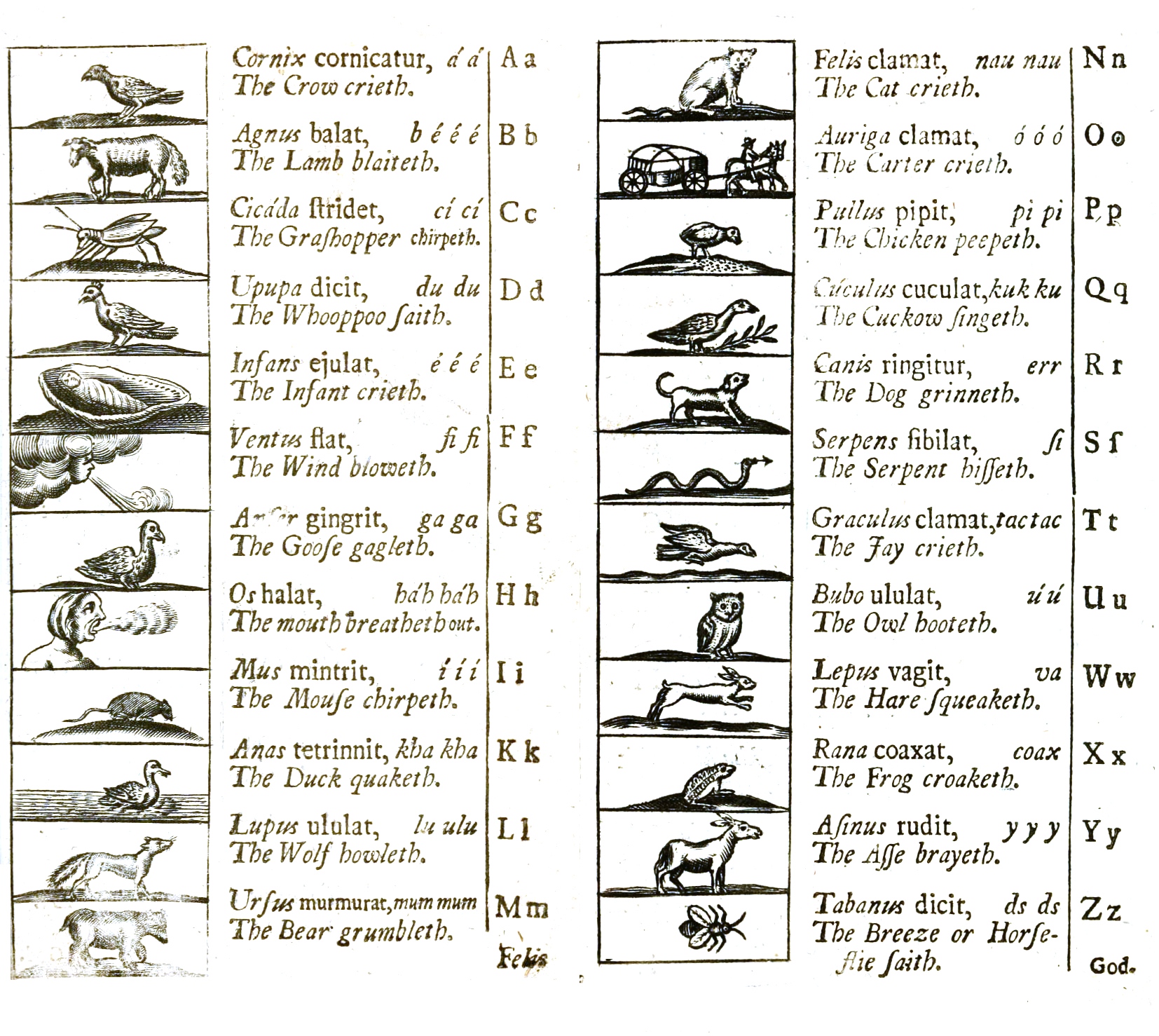
An illustrated alphabet brings things a learner can recognize into the work of reading.

Two columns of small illustrations of animals, people and wind, alongside Latin and English descriptions, written sounds and pairs of capital and lowercase letters.

Figure 1 · 1705 edition

Illustrated alphabet from Orbis sensualium pictus

Read across one row: picture, words, sound, letter. The page asks the learner to connect a printed symbol with something heard or seen. Its spelling and sound associations belong to its time. What familiar sight or sound would you use to introduce an unfamiliar idea to someone today?

Johann Amos Comenius (author); illustrator unidentified · Internet Archive · reproduction via Wikimedia Commons
Orbis sensualium pictus · Alphabet chart

View full size ↗Download image
Collection record and reuse rights

Display copies are resized and compressed. Source and license links apply to the image above.

Explore more museum and archive collections →

Education · The Textbook

Read the structure of a lesson

Choose a chapter and study how examples, definitions and exercises are arranged. Consider the knowledge it appears to assume.

Try this

Map the sequence and identify where a new term first appears. Try one exercise using only the preceding material.

Reflect

Which prerequisite is present only by implication?

Take it further · optional follow-up

Rewrite one transition between an example and an exercise. State which idea the learner must carry forward and where the chapter supports it.

Compare with another activity · Graphic Design

The Grid: Make the underlying arrangement visible →

Prepared study prompt · not an editor-reviewed research article