Skip to content
← Learning guide

The Supply Chain

← Back to study results
Other download formats

Illustrated study

One stop in a longer journey

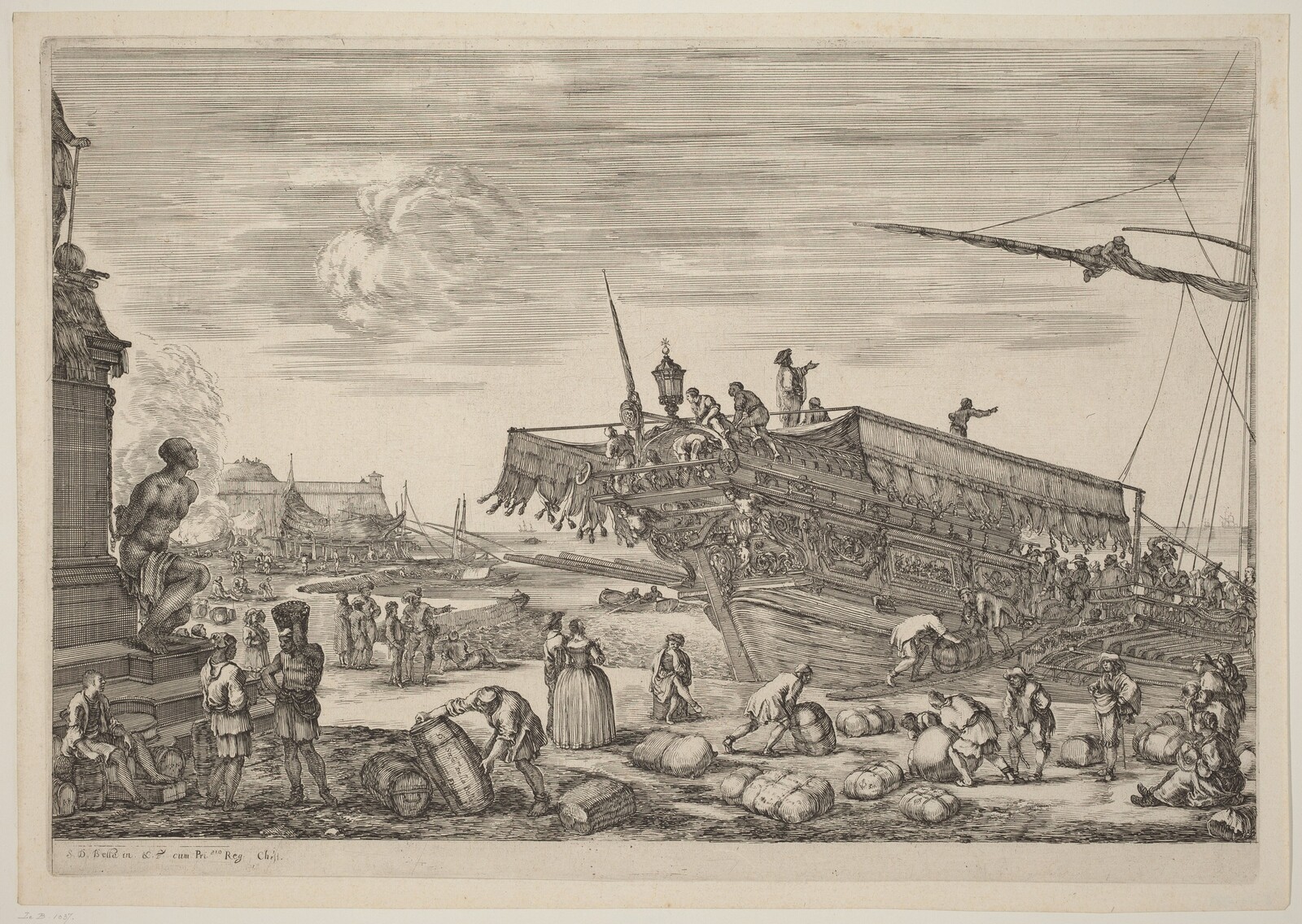
A seventeenth-century harbor etching makes the handling of cargo visible at the water’s edge.

Etching of a busy harbor with people carrying bundles and rolling barrels toward a large decorated ship, with smaller boats and buildings behind.

Figure 1 · Probably c. 1654/1655

Loading a Ship

Follow a barrel or bundle from the quay toward the ship. Several people and kinds of equipment take part in moving it. This scene shows one transfer, leaving the cargo’s origin, ownership and destination outside the frame. Choose an object near you: which stages of its journey can you identify, and whose work remains unseen?

Stefano Della Bella · National Gallery of Art, Washington
Ailsa Mellon Bruce Fund · 1972.66.3

View full size ↗Download image
Collection record and reuse rights

Display copies are resized and compressed. Source and license links apply to the image above.

Explore more museum and archive collections →

Manufacturing · The Supply Chain

Follow an information gap

Use a fictional product to trace materials, suppliers and handoffs. Keep unknown origins visible.

Try this

Draw a simple chain and attach one question about provenance, timing or responsibility to each handoff.

Reflect

Which missing answer would most change a sourcing decision?

Take it further · optional follow-up

Remove one answer from your fictional chain. Trace which later decisions become uncertain and propose a question for the responsible handoff.

Compare with another activity · Software

The Stack: Follow a dependency →
Connect this activity with other subjects

Follow a question through three activities, with a worked example and a worksheet for your observations.

  • Work with uncertainty →

    Make assumptions and missing information visible before proposing an answer.

    This topic is activity 3 of 3.

Prepared study prompt · not an editor-reviewed research article