Skip to content
← Learning guide

The Shade Tree

← Back to study results
Other download formats

Illustrated study

A tree, seen in its details

A botanical plate turns a familiar canopy into leaves, flowers and fruit worth noticing.

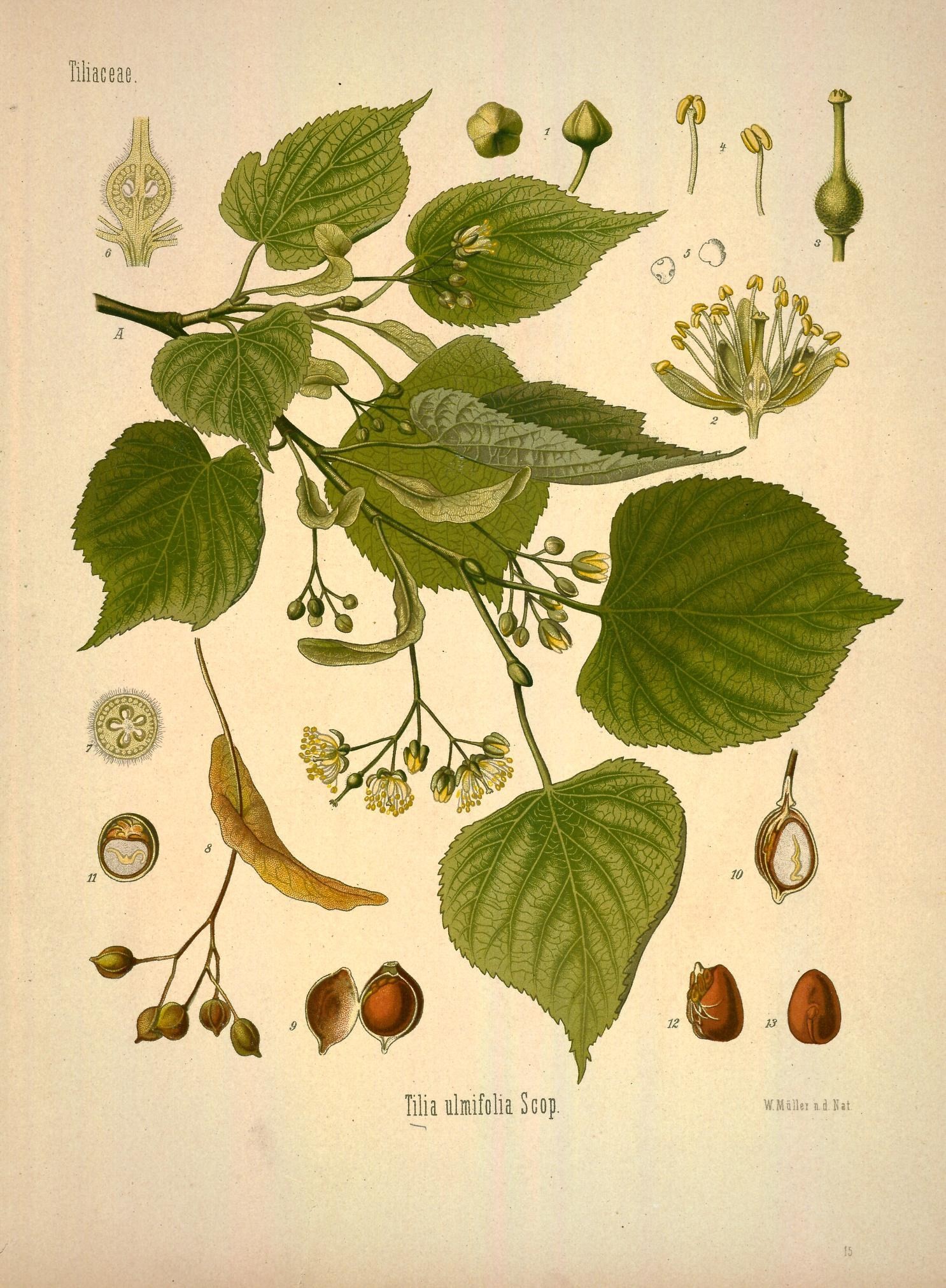
Botanical plate of a linden branch with heart-shaped serrated leaves, hanging flowers, pale elongated bracts and numbered details of flowers, fruit and seeds.

Figure 1 · 1887

Small-leaved linden — Tilia cordata

Follow the veins across a leaf, then find the pale bract beside the hanging flower cluster. The enlarged details show structures too small to read in the whole branch. Next time you stand beneath a tree, look from its canopy down to one leaf: what can you recognize, and what would you need to observe through another season?

W. Müller (signed on plate); Köhler’s Medizinal-Pflanzen · Biodiversity Heritage Library · Missouri Botanical Garden
Plate 15 · BHL page 303592 · BioDivLibrary scan via Wikimedia Commons; reproduced unchanged

View full size ↗Download image
Collection record and reuse rights

Display copies are resized and compressed. Source and license links apply to the image above.

Explore more museum and archive collections →

Landscape · The Shade Tree

Observe shade through time

Treat a tree and its shade as a changing scene. A single photograph records one moment, not the experience of a whole day or season.

Try this

Sketch the shaded area at two times and note where people can sit or walk. Observe without inspecting unstable limbs.

Reflect

How would your judgment change in another season or for another user?

Take it further · optional follow-up

Compare your two shade sketches against a fictional person's daily schedule. Identify a time when the place would need a different option for comfort.

Compare with another activity · Built Environment

The Courtyard: Read the space between rooms →

Prepared study prompt · not an editor-reviewed research article